At the turning points of a season, I sometimes catch myself thinking this:
the difference between “people who seem lucky” and “people who keep struggling” can’t be explained by talent or environment alone.
As a Hisseki-jutsu calligrapher, Madara, I’ve spent many years observing the act of writing and drawing. When we write in daily life, we unconsciously leave personal patterns—our own “habits”—on the page. And within those habits, there are quiet but reliable clues about our inner state and our behavioral tendencies.
So what is handwriting analysis?
My approach is inspired by the work of Noriko Suzuki, founder of the Kansei Research Institute for holistic human development and author of an illustrated guide to Hisseki-jutsu. I have studied her ideas in my own way and incorporated them into my calligraphy practice.
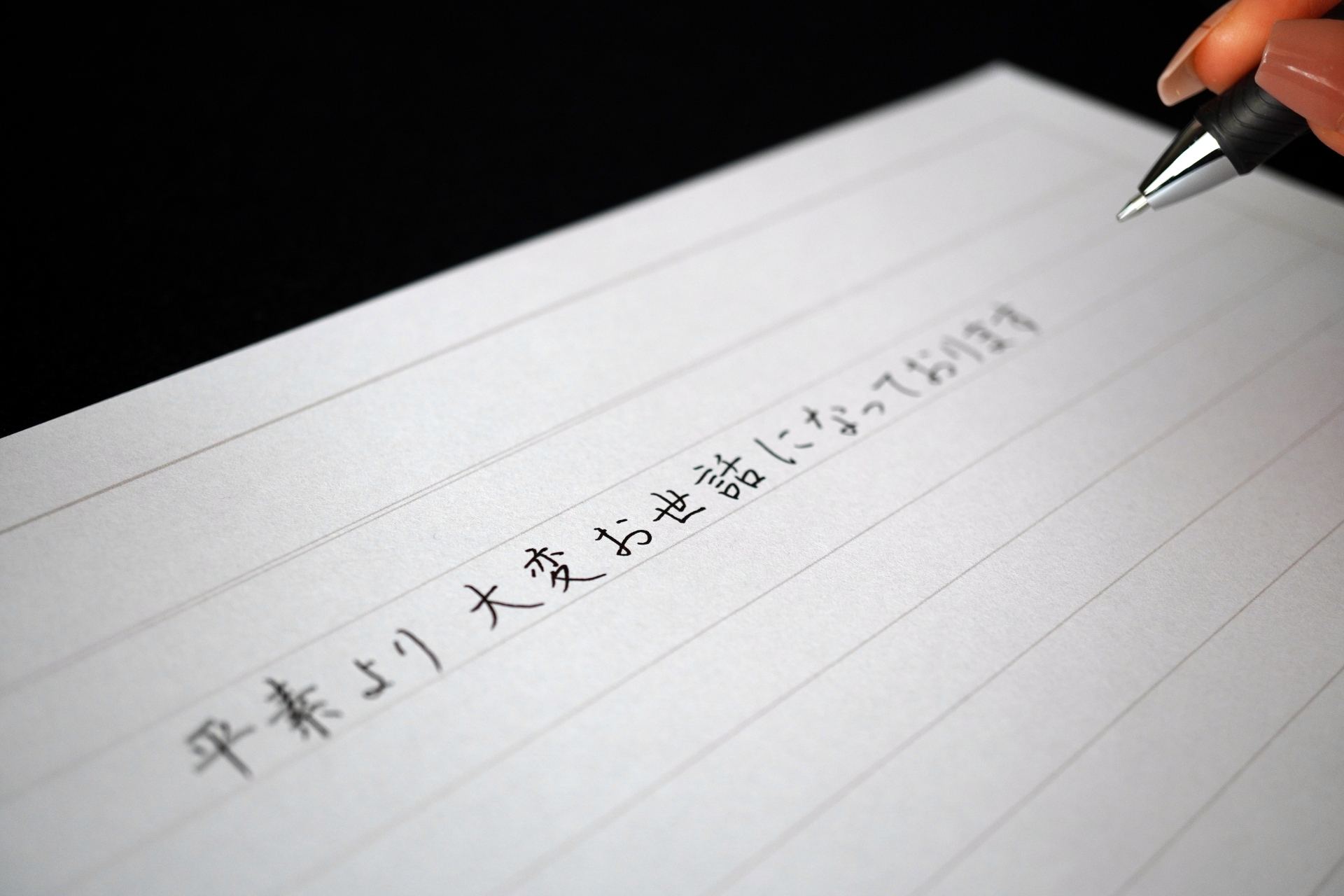
Handwriting analysis, rooted in graphology, looks at features such as shape, pressure, spacing, and balance to interpret a writer’s tendencies in thinking and behavior. The key idea is this: personality does not live only in the mind—it appears through action. And handwriting is one of the traces of that action.
Now, here is the part that makes people say, “Oh, I didn’t know that.”
Hisseki-jutsu is not about “guessing” who you are based on your past. It is about using handwriting to “shape” what comes next.
Many people see handwriting analysis as a tool for self-understanding—and it is. But Hisseki-jutsu points in the opposite direction:
when you intentionally change how you write, the direction of your attention can shift, the quality of your actions can improve, and your future can begin to move differently.
Through years of calligraphy, I’ve come to believe this deeply.
For example, people whose writing becomes very small and tense may also hesitate or shrink in daily decisions. People who press too hard may push themselves beyond their limits without noticing. Of course, handwriting alone cannot define a person. But our habits do appear on paper—and those habits can be adjusted through practice, step by step.
That is why I say this:
“Hisseki-jutsu that invites happiness” is not a magic spell. It is a method of tuning your actions.
If you want to feel happier, why not try changing your handwriting?
This is not abstract philosophy—it is practical. To change handwriting, you must move your hand. When you move your hand, your awareness shifts. When awareness shifts, behavior changes. And when behavior changes, your relationships, choices, and the quality of daily decisions can change as well. Handwriting is not only a result—it can also become an entry point for transformation.
My calligraphy is created in a single stroke—no retakes. That means I cannot “fake” it. But precisely because it is one take, the heart and breath of that moment appear honestly. And what appears honestly can be refined honestly. In that process, I feel something like prayer—a rhythm of life.
You don’t need to overthink it. Choose just one intention for today:
“Write carefully.”
“Write more freely.”
“Write without rushing.”
One is enough. As you gently adjust your handwriting within everyday writing, something interesting happens: mental noise begins to settle, and you feel yourself returning to your center.
Happiness doesn’t fall from a distant place. It rises from small daily actions, accumulated over time.
If the smallest unit of action can be “a letter,” then Hisseki-jutsu is a happiness habit that anyone can practice.
So today—what kind of handwriting will you live with?