The worldview of the work
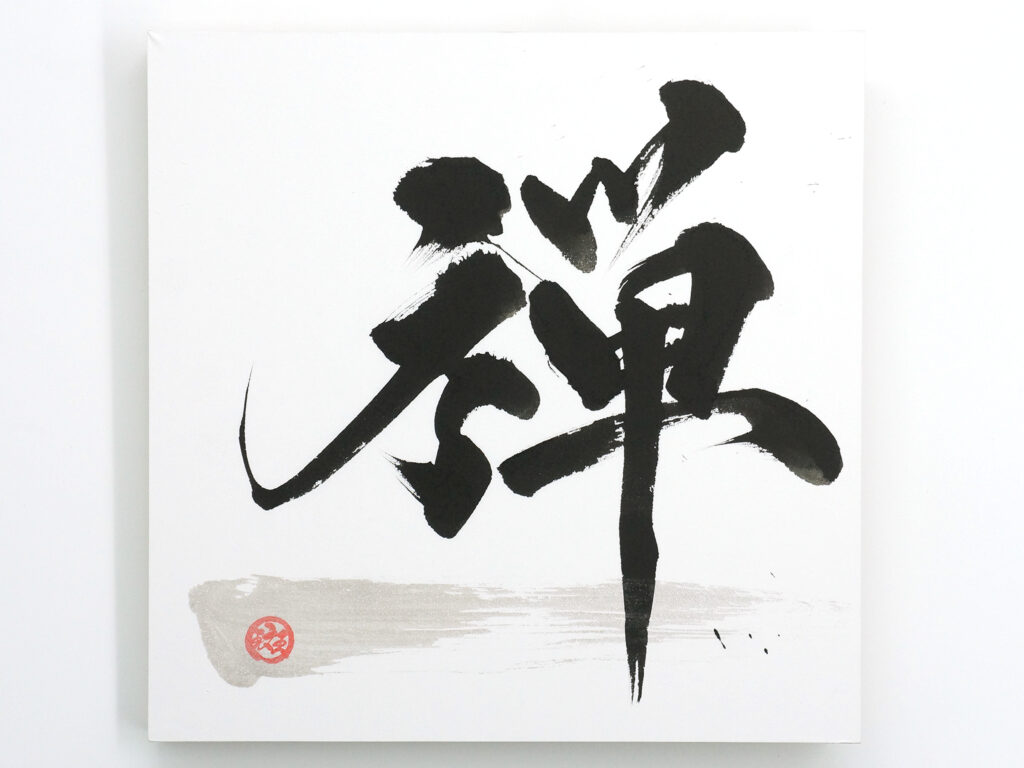
Zen, Blade of Stillness
Artist: MADARA
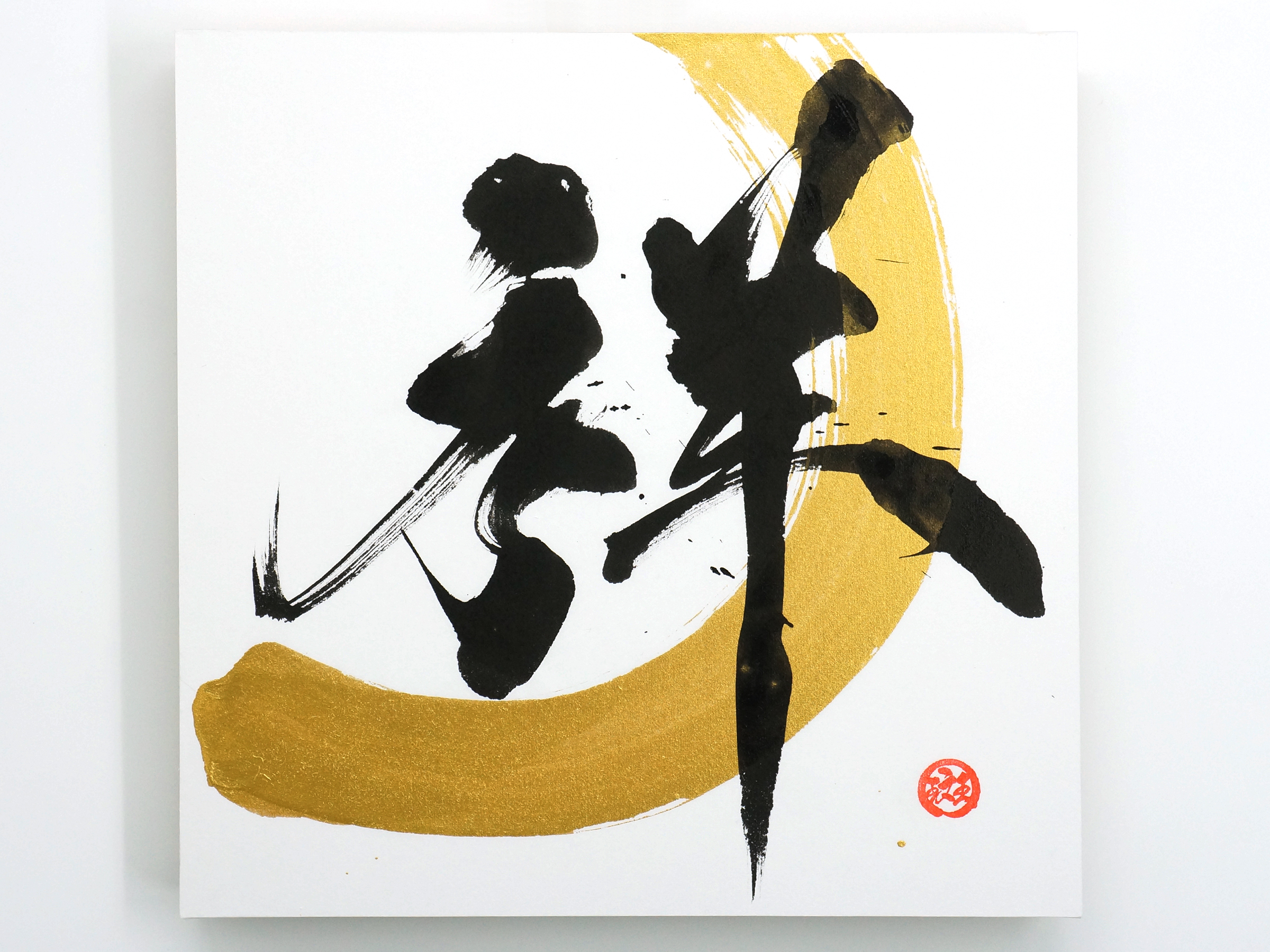
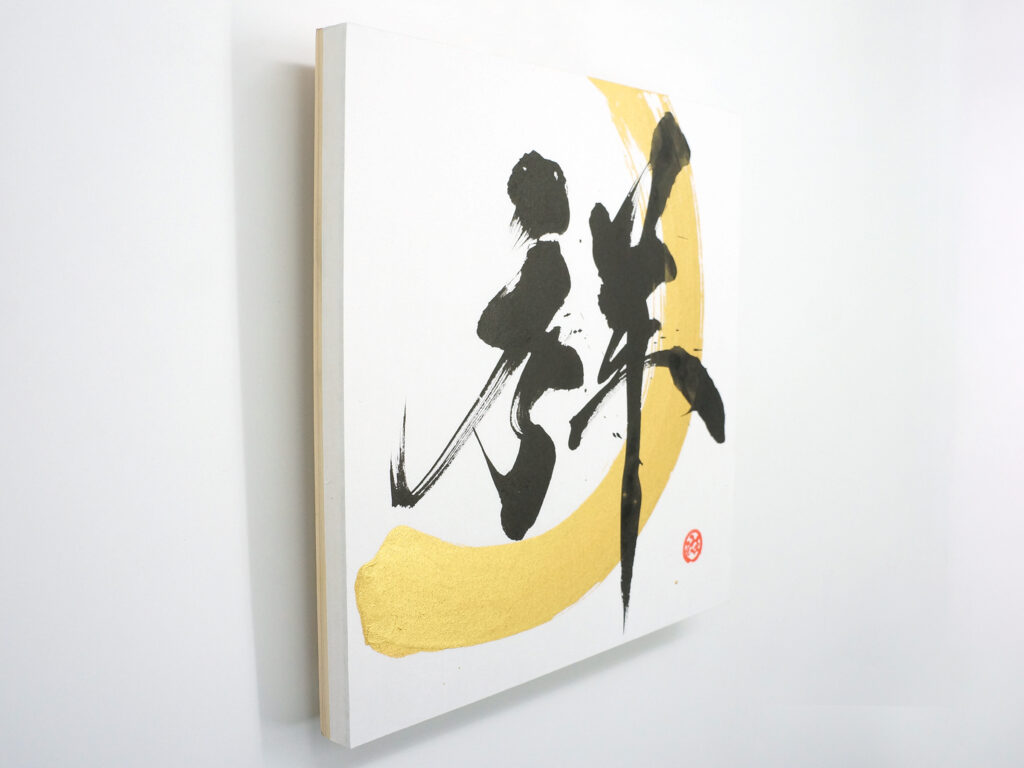
The meaning of “Sho” (祥) is “a sign that something good is about to happen” and “an auspicious omen.”
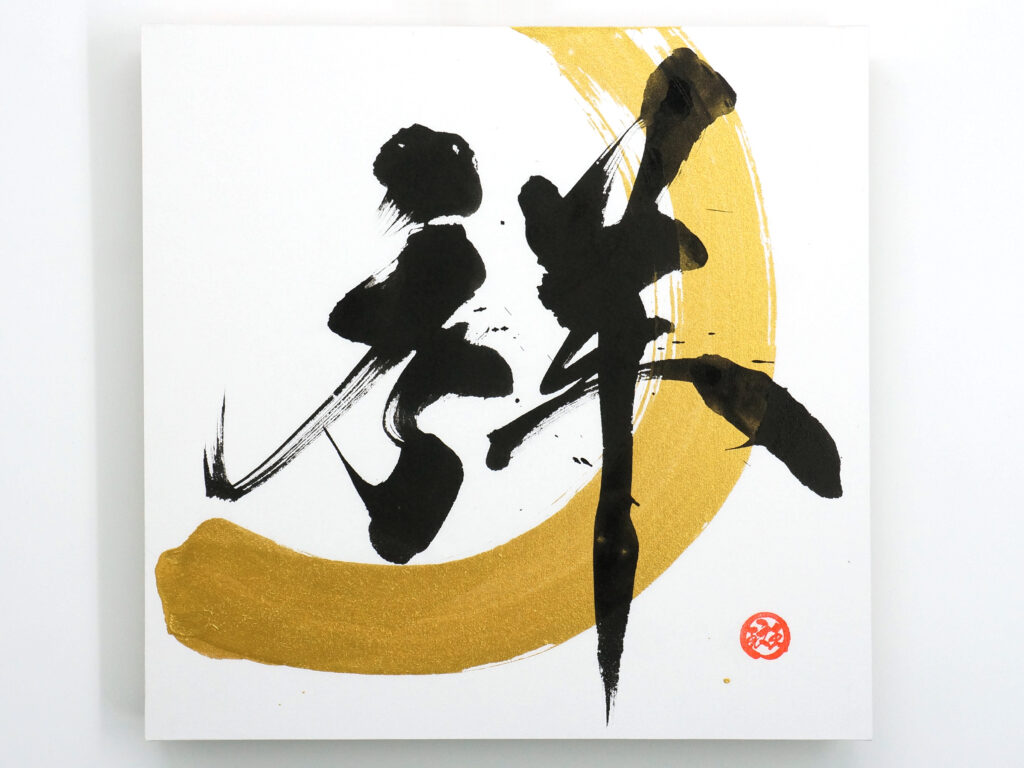
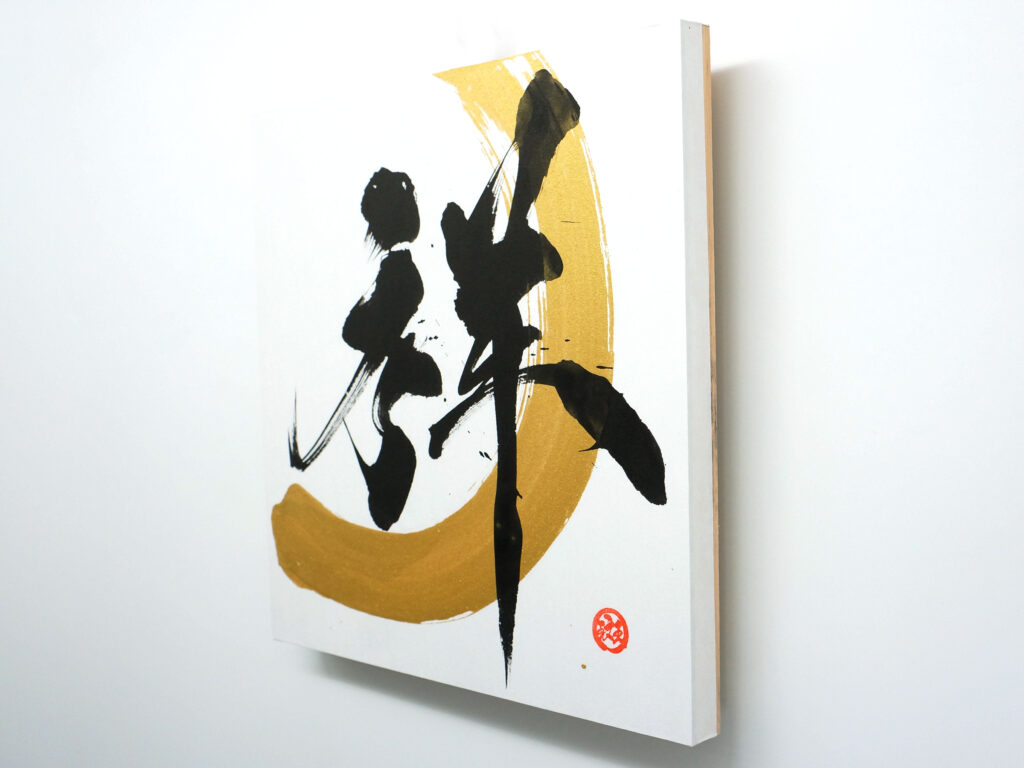
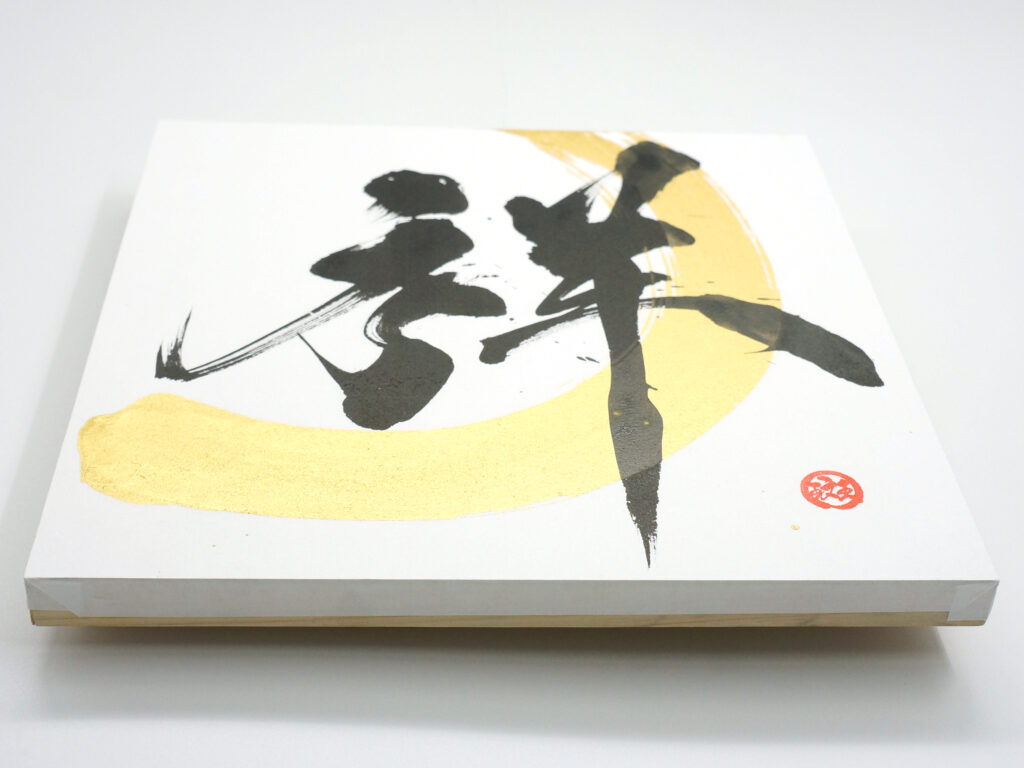
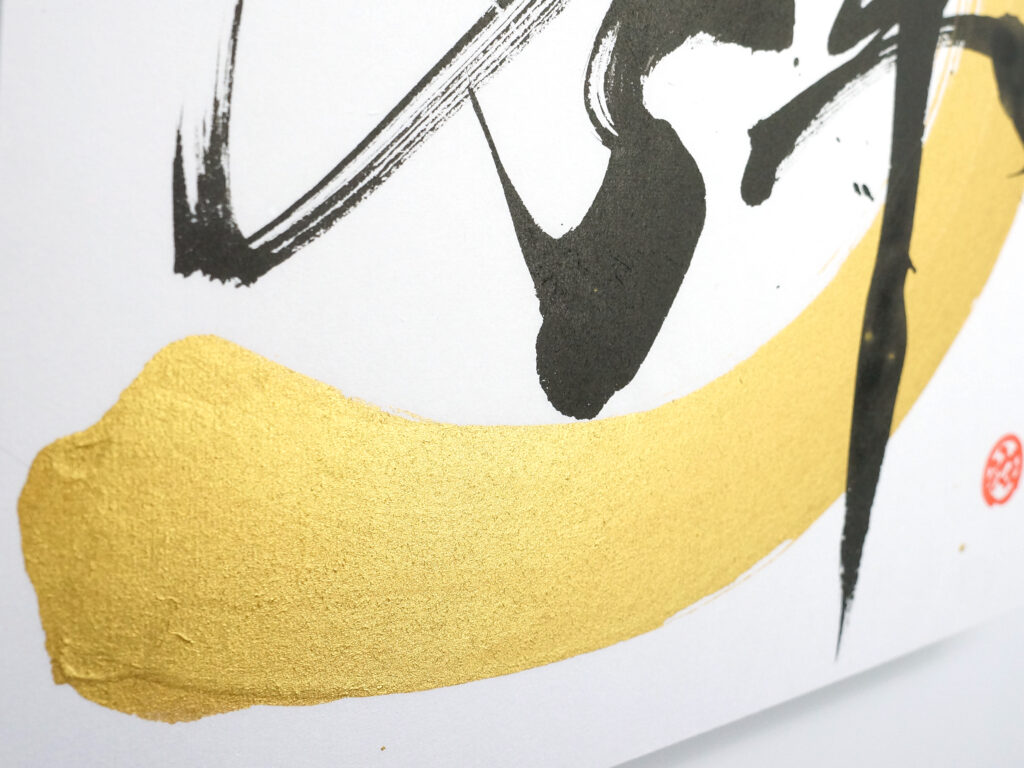
I boldly swept a thick arc of kin-dei gold across the background, then wrote “Sho” in a single, one-take stroke with black Sumi ink.
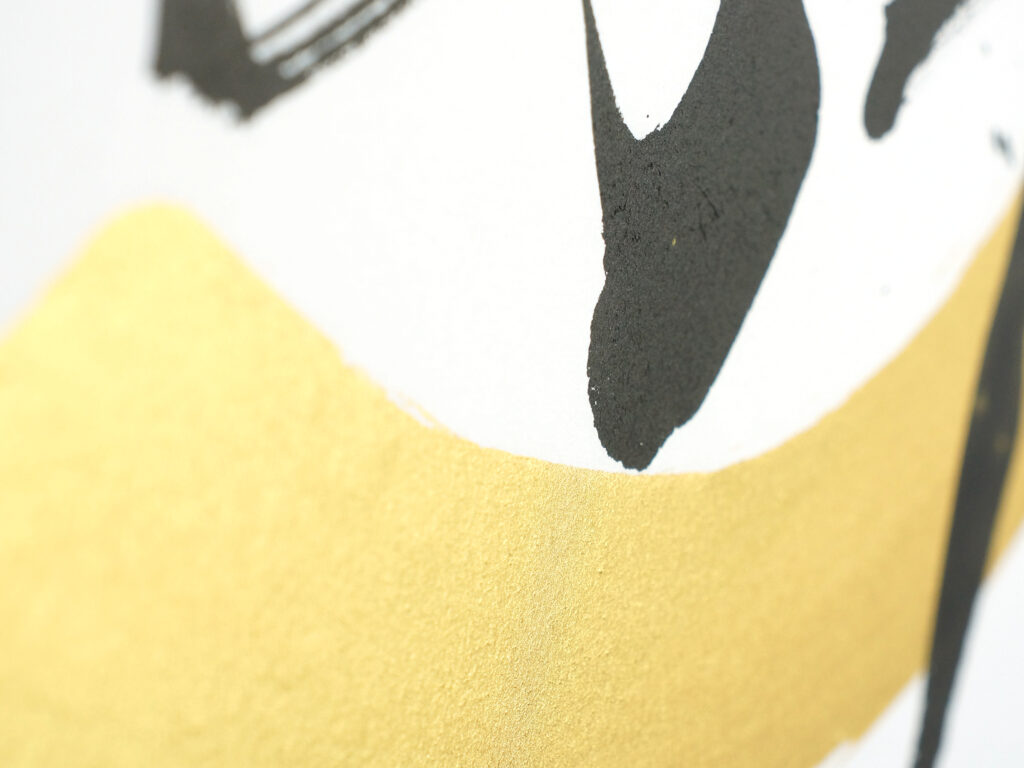
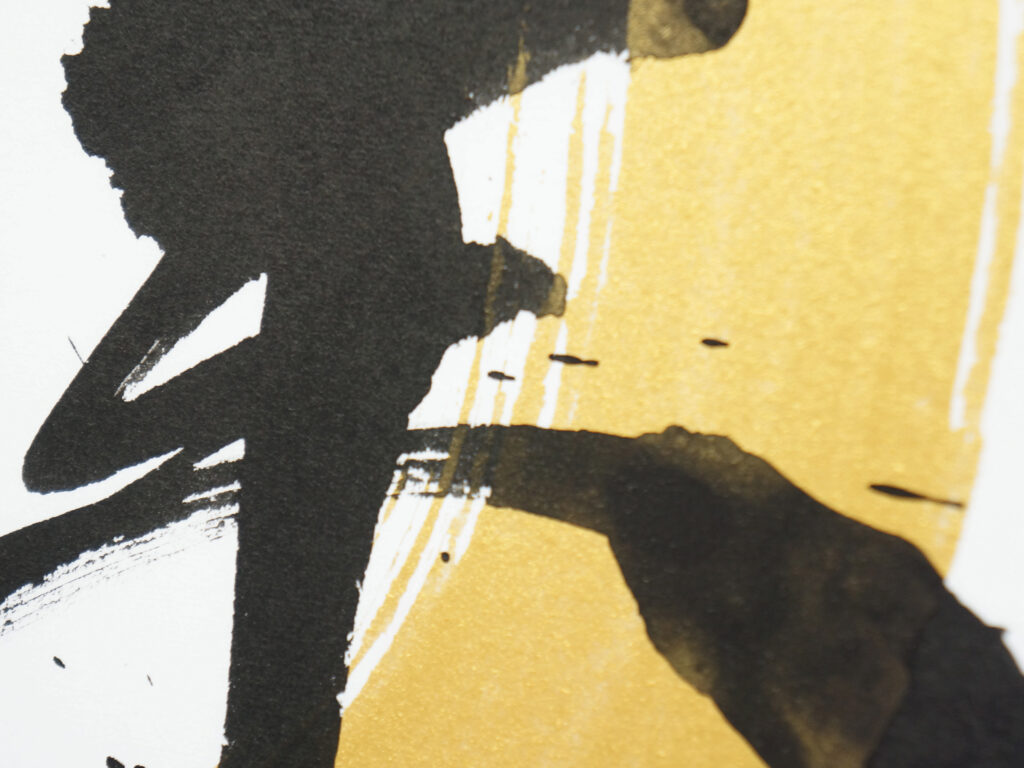
The arc rises thickly from the lower left and tapers as it moves toward the upper right. The brushmarks that hold the gold particles reveal a gritty texture up close, yet from a distance they read as a soft, gentle glow. The gold line does not complete a full circle; I intentionally leave it open.
This is because I wanted to place not “a finished ending,” but “a connection and flow that is just beginning.” I created this piece with a wish: that you, with your goal in mind, will look at it each morning, steady your breath, and step forward with energy toward that goal.
Viewed in morning daylight or under a single spotlight, the kin-dei arc subtly rises with changes in angle, and the black “Sho” appears deeper and more grounded.
It is said that “Sho” is composed of “示” (an altar) and “羊” (an offering), expressing an auspicious sign that appears in a place of prayer. Black is determination, the gold circle is the sign. The red seal is proof of “here and now,” and the blank space is reserved for the future.
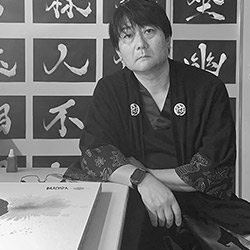
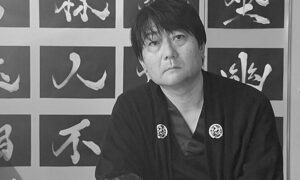
Behind the Scenes
A kin-dei gold work reveals its true nature not while you are painting it, but after it has dried. Right after application, kin-dei honestly looks like nothing more than “yellow mud.”
That is the first fascinating point: as it dries, the gold powder settles toward the surface, and with a slight change of angle and light, it suddenly becomes “gold.” Kin-dei is less a paint than “a layer of powder that carries light.”
With this piece, “Sho” (祥), I started with the gold. If you write the black first, the gold applied afterward can pick up the ink and lose its clarity. So I first swept the arc behind it in a single breath. What I aimed for was not “decorative gold,” but gold that feels like the flow of life itself.
I made the arc thickest in the lower left. If you pause too long there, the kin-dei pools and becomes heavy. If it is too thin, it no longer reads as a “sign.” I pressed with the belly of the brush, then let it release and taper cleanly toward the upper right. I did not complete the circle, and I intentionally left it open because I did not want it to become a symbol of completion. Not “a finished circle,” but “a circle that is beginning.” I believe connection and fortune are not closed rings, but something that grows while in motion.
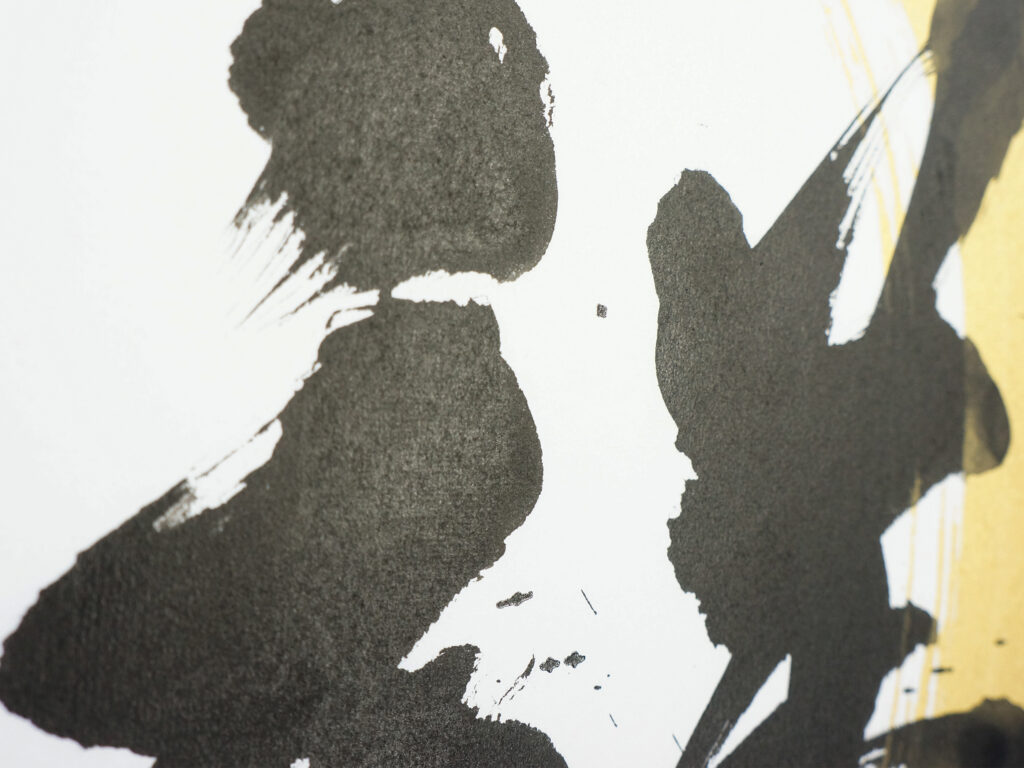
Then I wrote “Sho” in a single, one-take stroke with black Sumi ink. When the gold is strong, black can lose the fight, so I made the line bold and decisive, with one clear spine running through it. Rather than refining details, I prioritized momentum and breath. The instant weight of ink sinking into the paper collides with the lightness of gold, and only then does the composition finally tighten. Gold is the sign; black is determination. If that relationship collapses, this character can no longer be “Sho.”
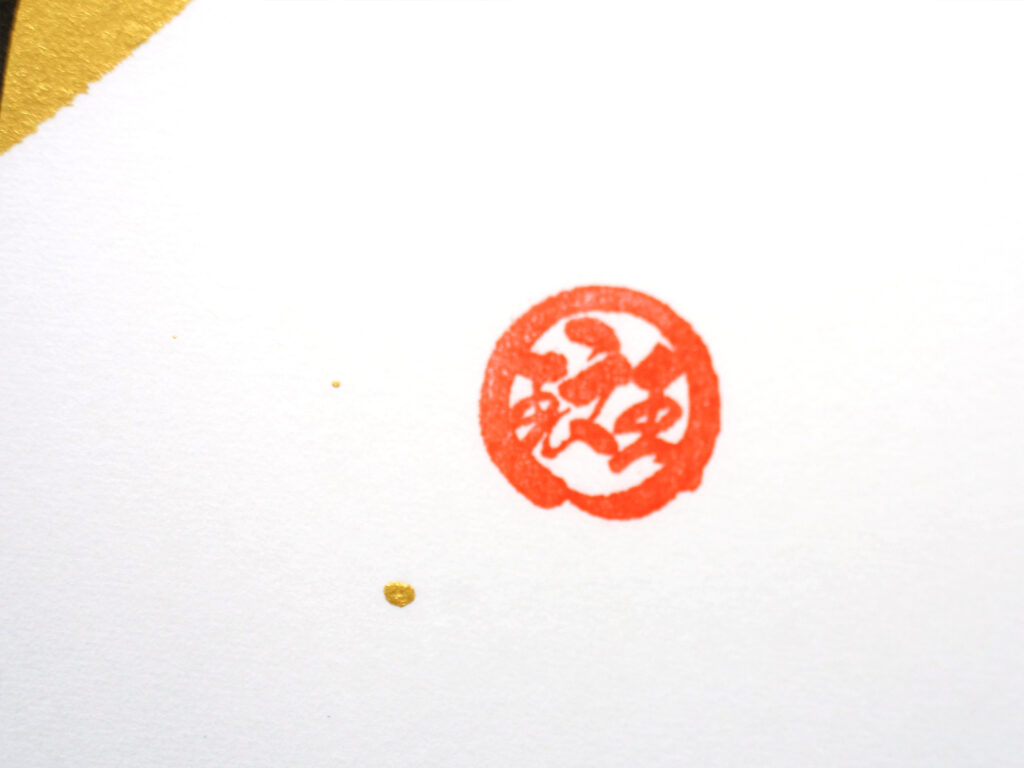
Even the placement of the red seal is a real hesitation. Red raises the temperature of the entire image. When you stamp it, it is as if blood begins to flow through the work, turning it into a living piece and bringing it to “completion.” But depending on where you place it, it can also fix the work too firmly in place. So I stamped it small, as proof of “here and now,” in a position that does not interrupt the arc’s movement. Up close, the gold particles remain visible; from a distance, the arc supports the entire piece. I want you to look at it each morning and move toward your goal with energy. For that, I shaped the arc as something that “pushes from behind.”
I recommend viewing it in the morning. When natural light enters at an angle, the kin-dei arc rises softly, and the black “Sho” appears at its strongest. Place “a good sign” at the start of your day—this is the way I hope you will live with this work.
Kanji meaning
Sho (祥)
- “An auspicious sign”
A good omen. Zuisyō (瑞祥).
2. “Good fortune”
Something good; a blessed turn of events.
3. “Auspicious / favorable (a state or condition)”
Used in words such as Shōzui (祥瑞).
As an adjectival noun (classical/literary usage)
- “Shō nari (祥なり)” = auspicious; showing a good omen.
Related terms
- Zuisyō (瑞祥) = an auspicious sign
- Fushō (不祥) = an unfavorable sign (as in fushōji, “scandal/incident”)
- Hasshō (発祥) = the beginning or origin of something (where it first arose)
One “huh, interesting” point:
The “祥” in fushōji (不祥事) originally means “an auspicious sign.” Adding 不 flips it into “not auspicious,” i.e., a bad sign—hence the nuance of “unfortunate incident.”
Work details
| item | Content |
|---|---|
| The basis of the work | Wood Campus |
| Material | wood |
| Size | 29.7 × 29.7 × 1.7 cm / 11.7 × 11.7 × 0.7 inches |
| Materials used | Sumi ink, Gold mud |
| Finishing the work | Made with Japanese paper pasted on a wood canvas and India ink(Sumi-ink) |
| Regarding domestic and international shipping | ・International shipping available: Ships via FedEx if no designated shipping company is specified. ・Domestic shipping in Japan: Ships via Yamato Transport if no designated shipping company is specified. |
| Packaging at time of shipment | We can also accommodate requests for packaging such as simple packaging and heavy-duty packaging, so please contact us for details. |
| Shipping | Decisions will be made in consultation with the buyer, such as using transportation suitable for art works and taking out insurance. |
| Compensation for works | The artwork will be delivered in the same condition as when it was sold. If you would like to purchase art insurance, we are happy to discuss this. |
| Payment Method | The payment amount is the artwork price plus shipping. Payment can be made by credit card. |
Artwork Storage and Handling
At our atelier, each artwork is carefully wrapped individually in Japanese washi paper and stored in a climate-controlled room where temperature and humidity are kept stable at all times.
The artworks are preserved in an environment protected from light, moisture, and dust, ensuring they remain in optimal condition until delivery.
After purchase, each piece is prepared with specialized protective packaging and shipped with the highest priority placed on safety, both domestically and internationally.
A Certificate of Authenticity is included with every artwork.