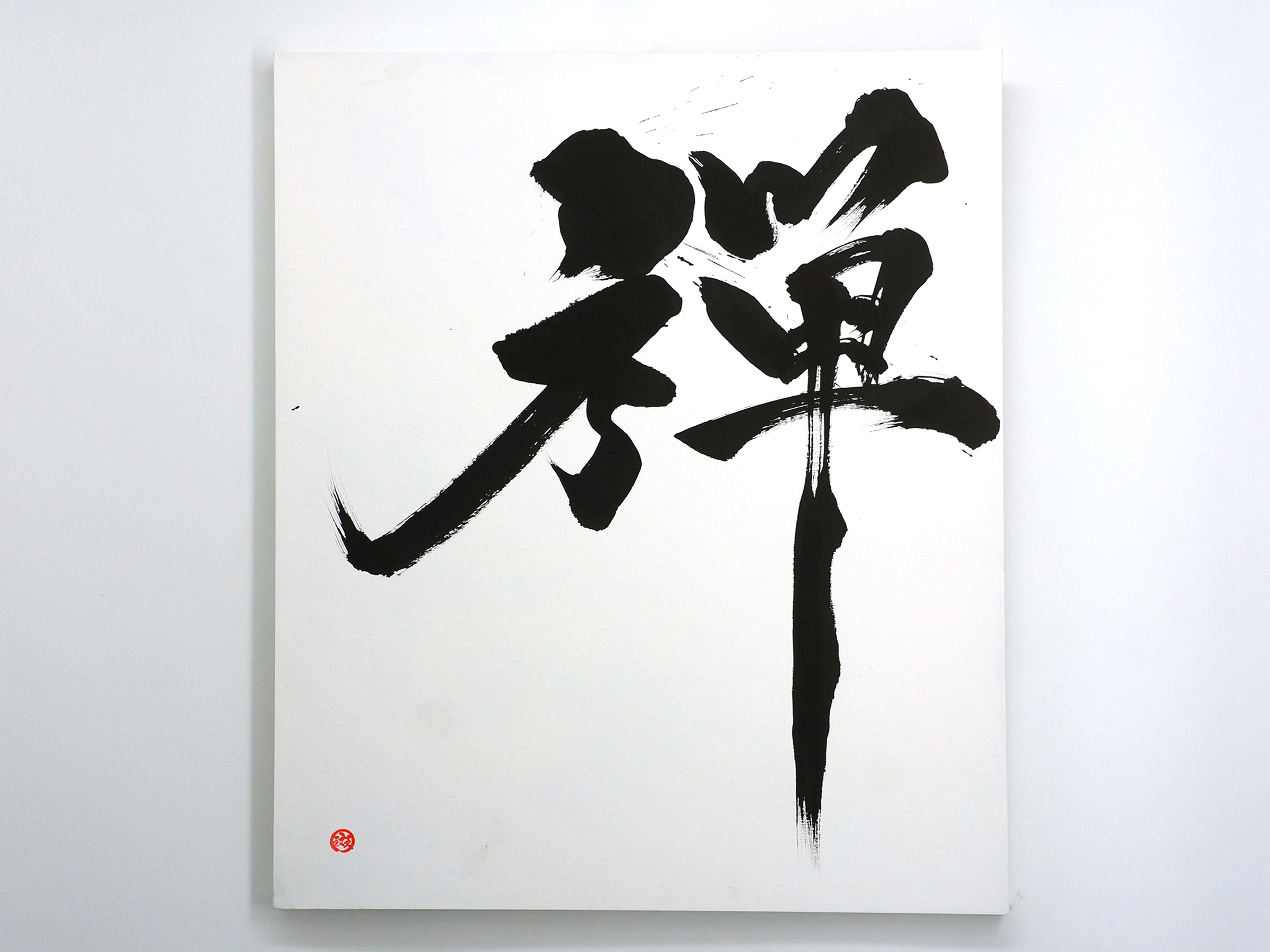
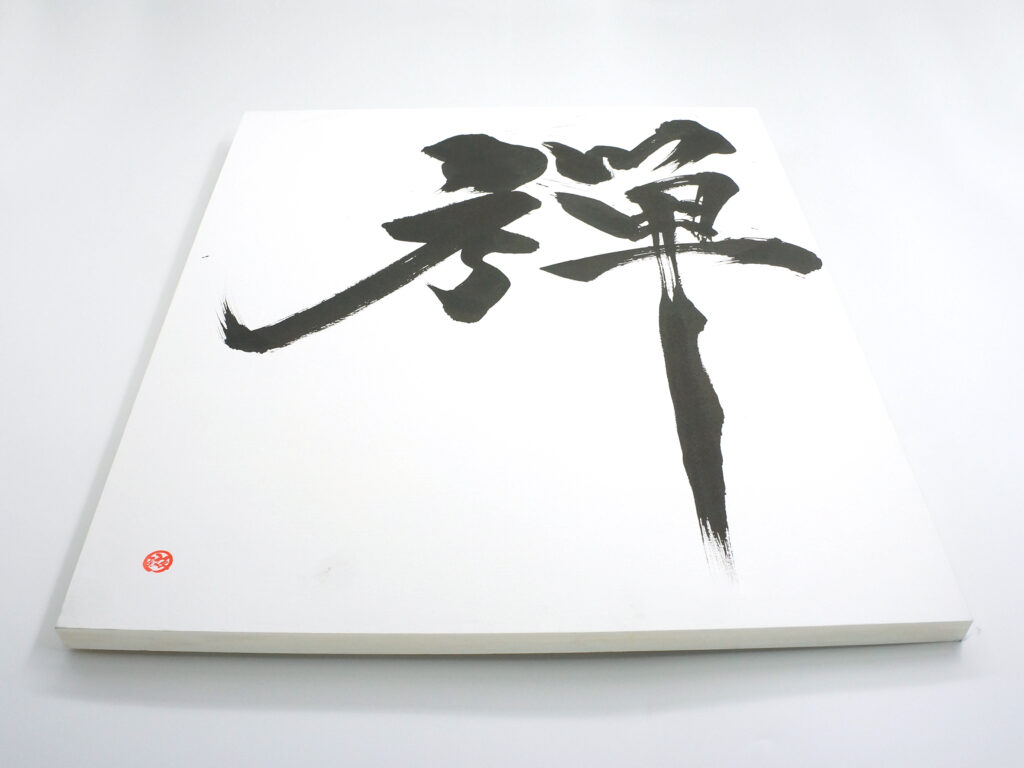
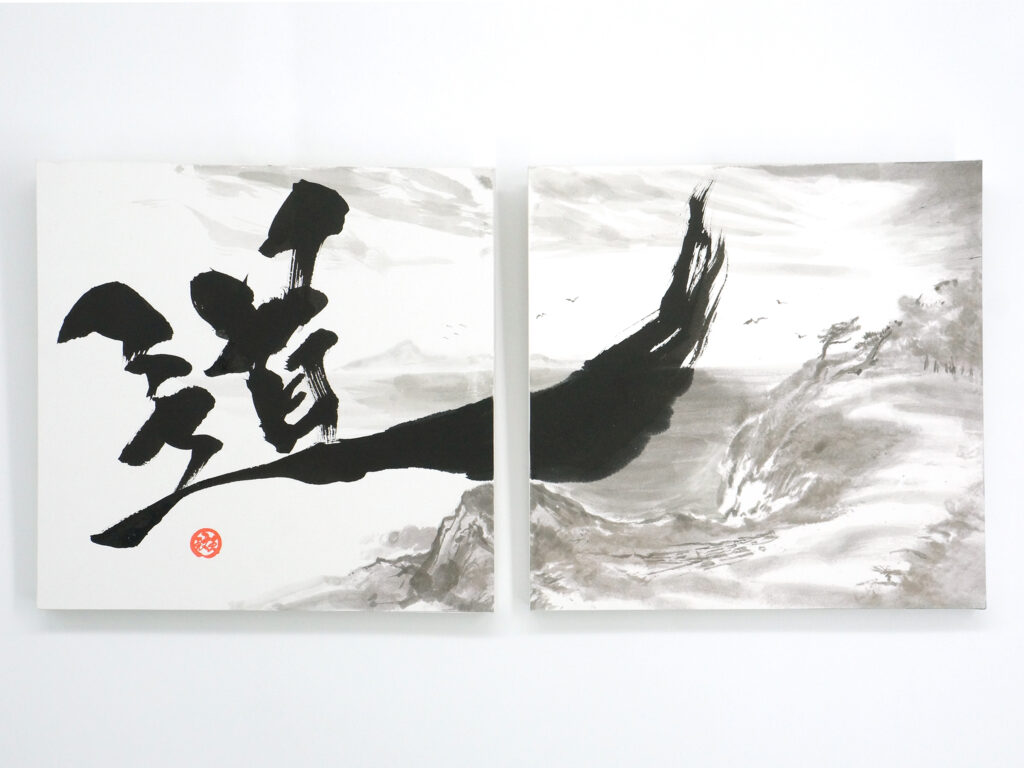
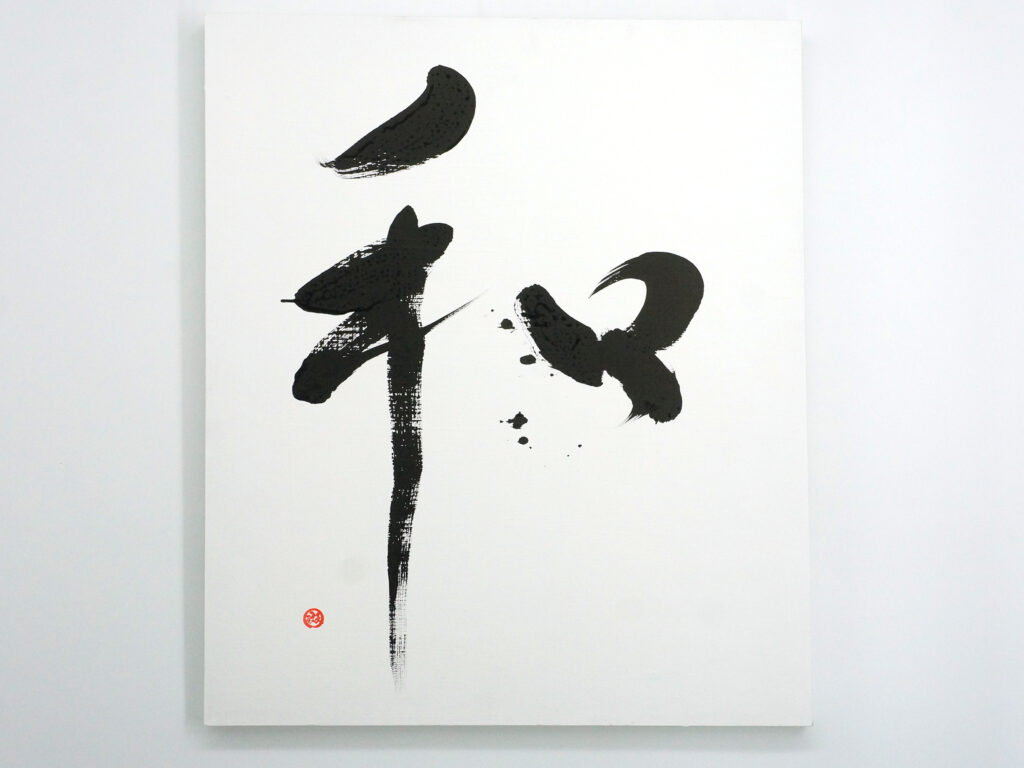
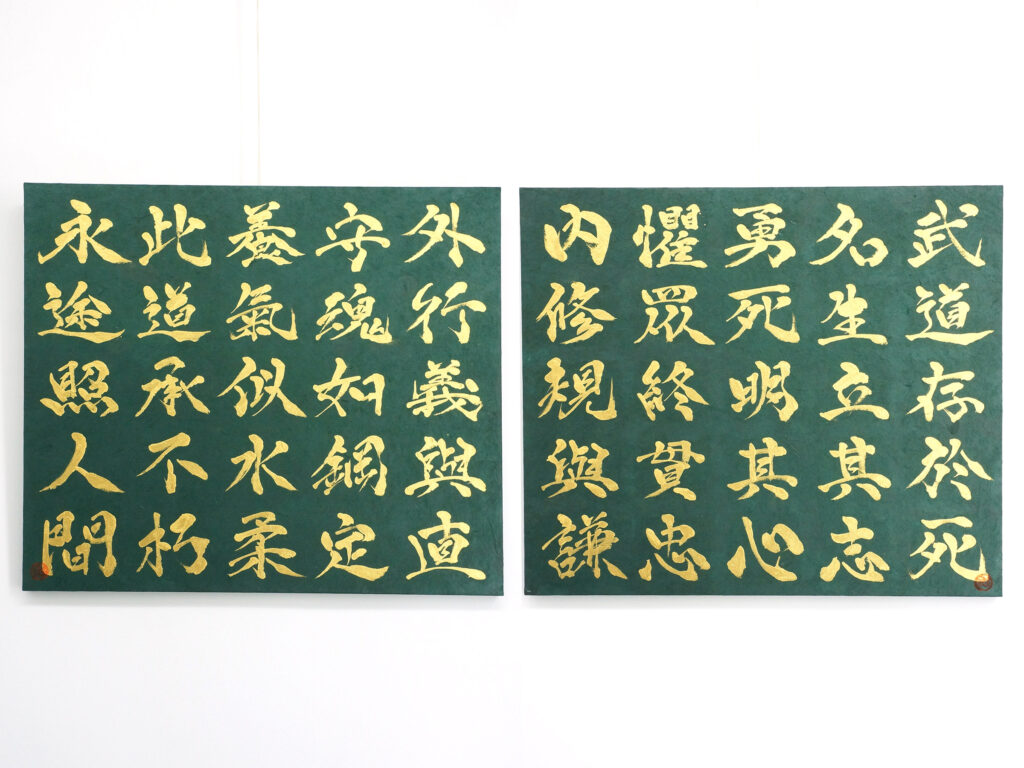
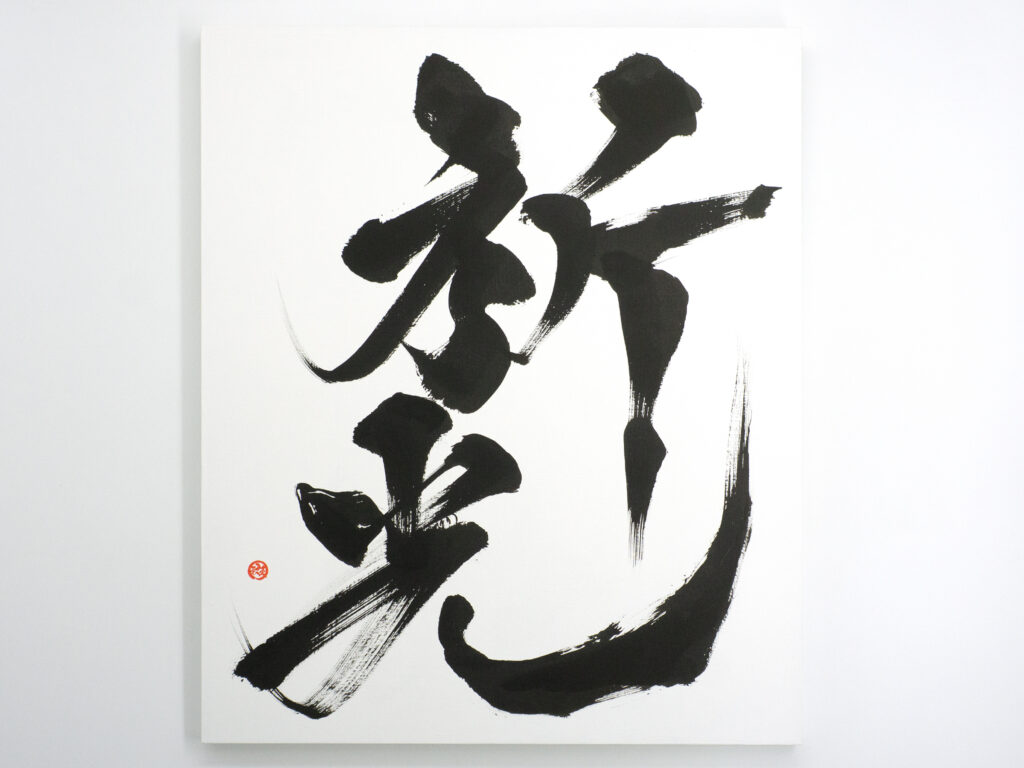
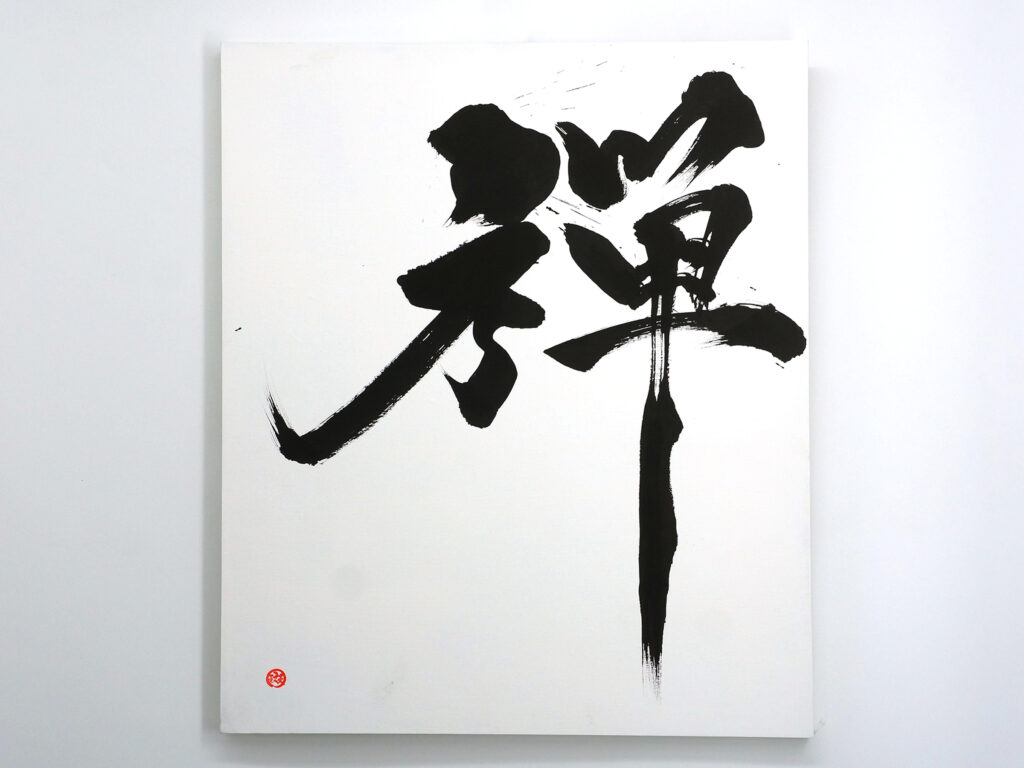
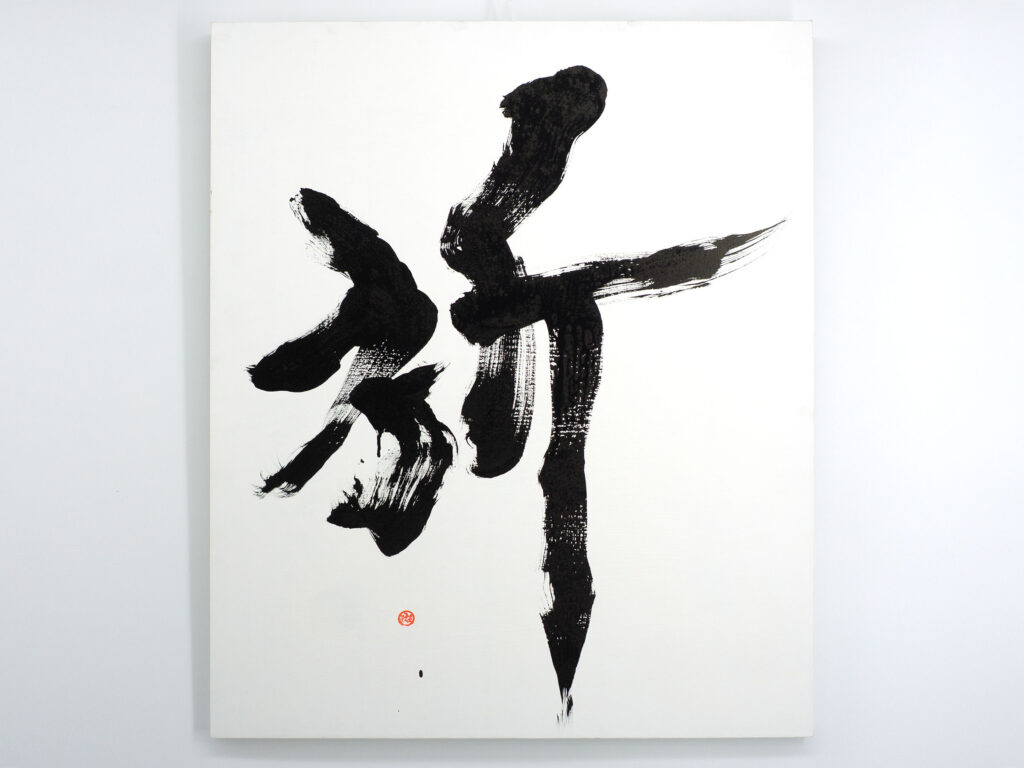
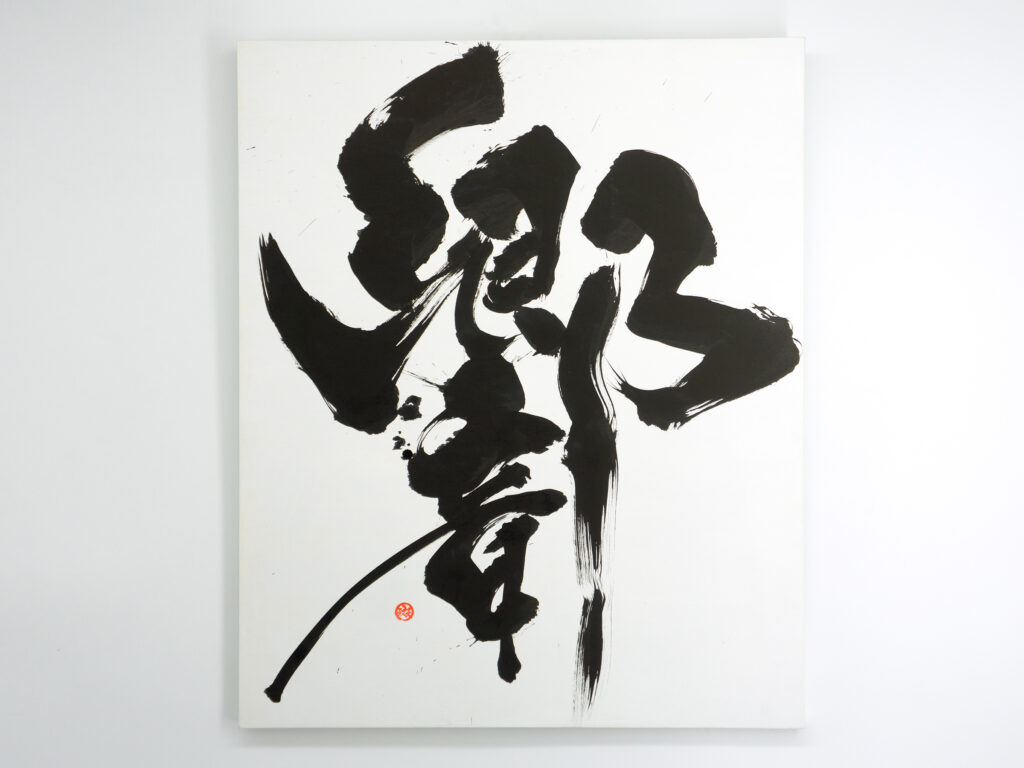
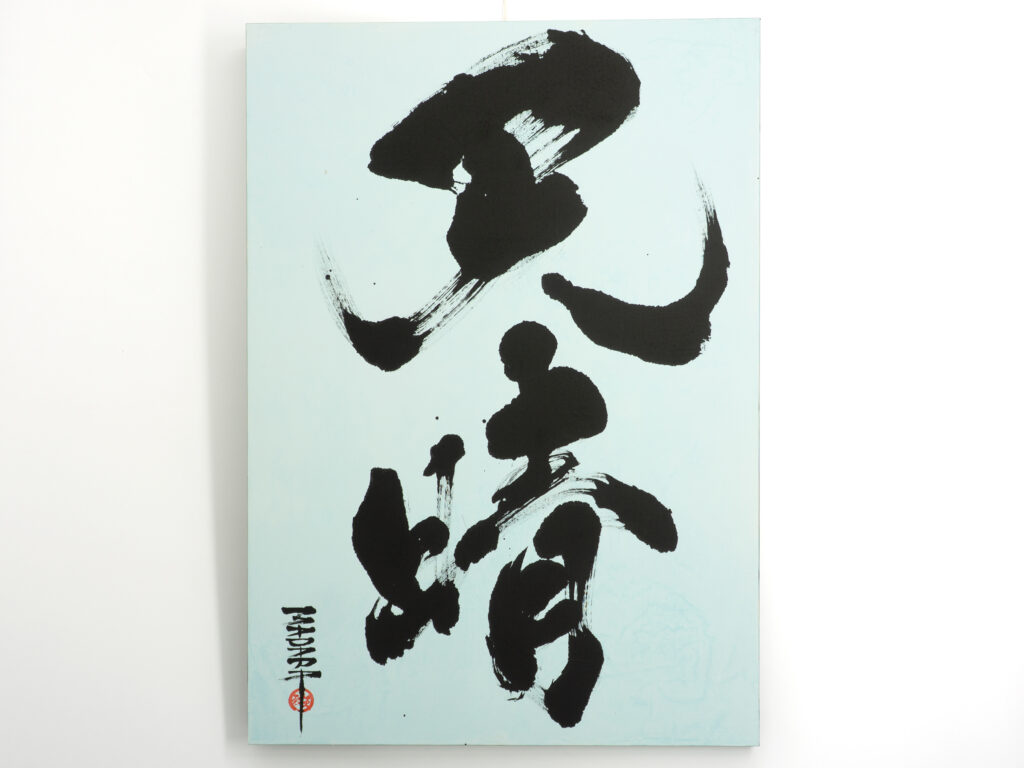
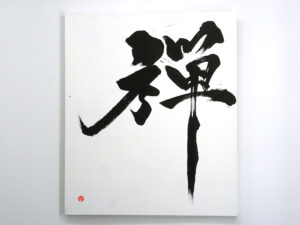
” 禅 ” Zen is a guide for one’s path as a human being.
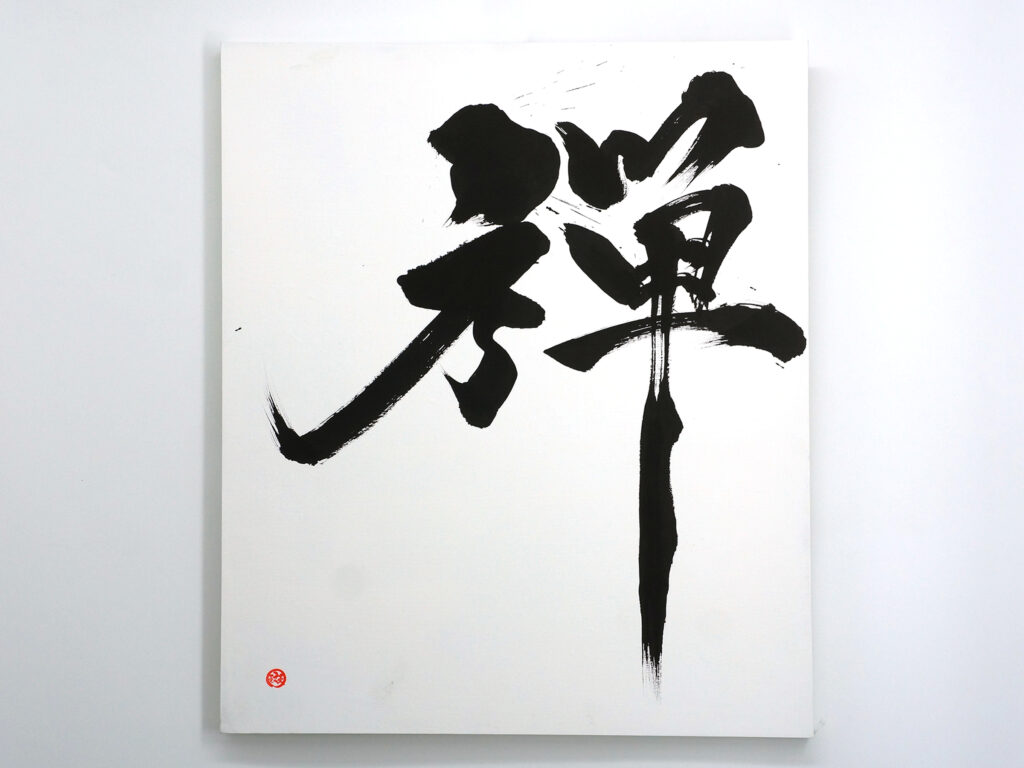
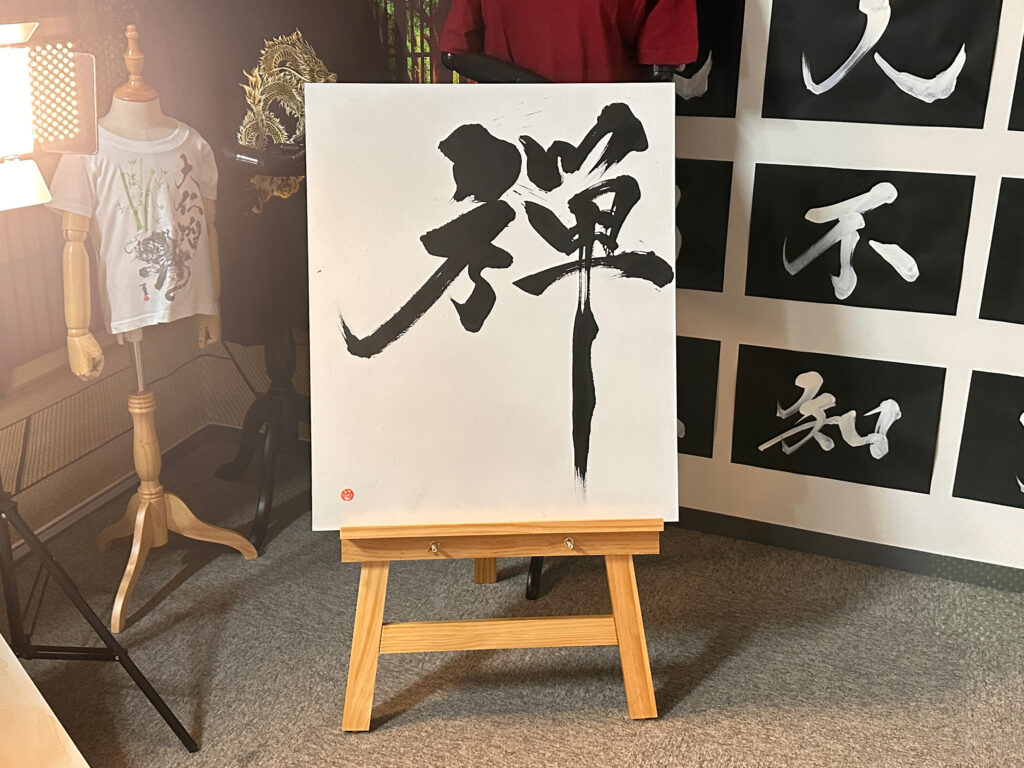
The artwork “Zen” invites the viewer to separate their awareness from the noise of the outside world and to look toward the quiet that inherently resides within. The lines placed on the surface are strong yet held in focused tension, while the surrounding space expands as emptiness that strips away the clutter of thought. Through the balance of these opposing elements, the viewer’s consciousness is naturally drawn toward the center, touching the silent realm deep within the mind.
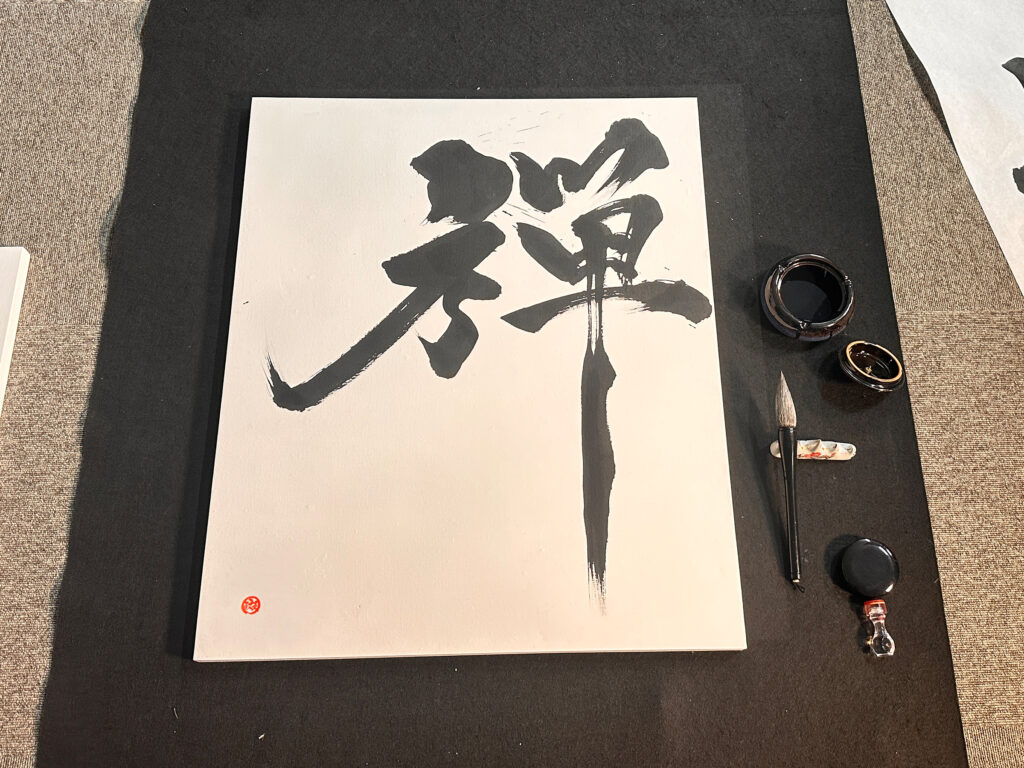
The vertical main stroke symbolizes the decisive moment of cutting through hesitation, standing firmly on the canvas as a pillar of unwavering spirit. The horizontal resonance that surrounds it expresses a mature stillness—not resistance, but acceptance—creating equilibrium between tension and calm within a single composition. The character “Zen” is not merely a written form; it is a symbol that guides the mind back to its core, awakening a state of inner quiet in those who encounter it.
The clarity of intention in each stroke, the awareness of space, and the focus on a single point—hallmarks of Hisseki-jutsu—imbue the artwork with a dignified presence. The work suggests that true value lies not in accumulating thoughts, but in letting them fall away. When one releases mental noise and simply exists, the true contours of one’s inner self become perceptible.
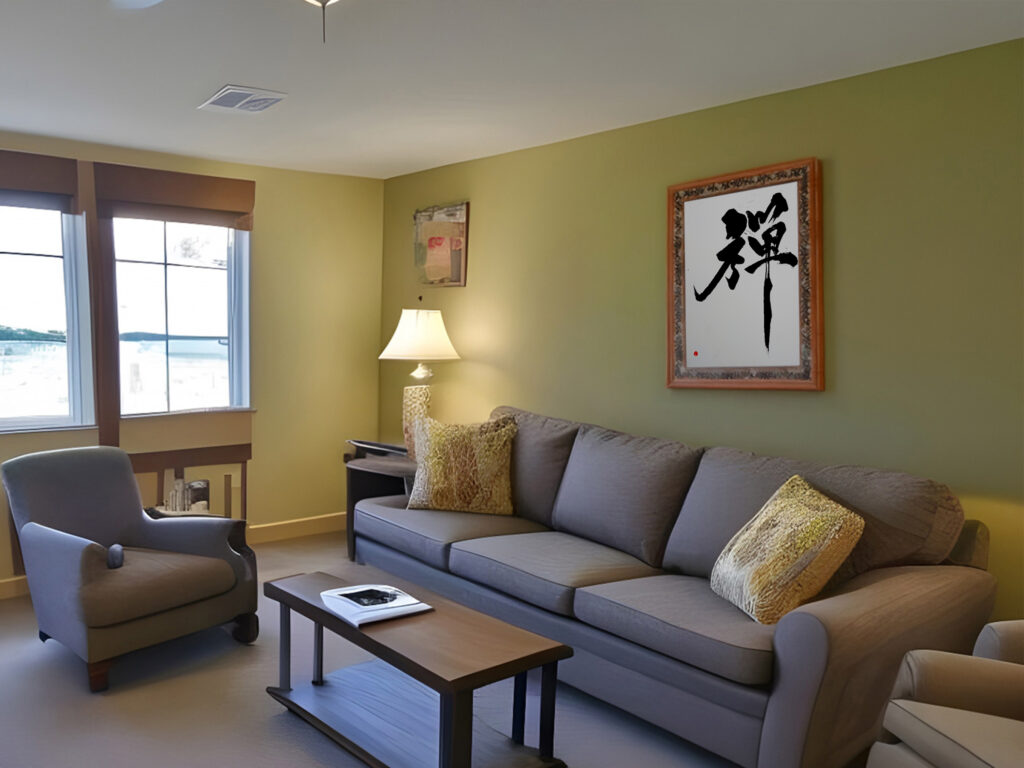
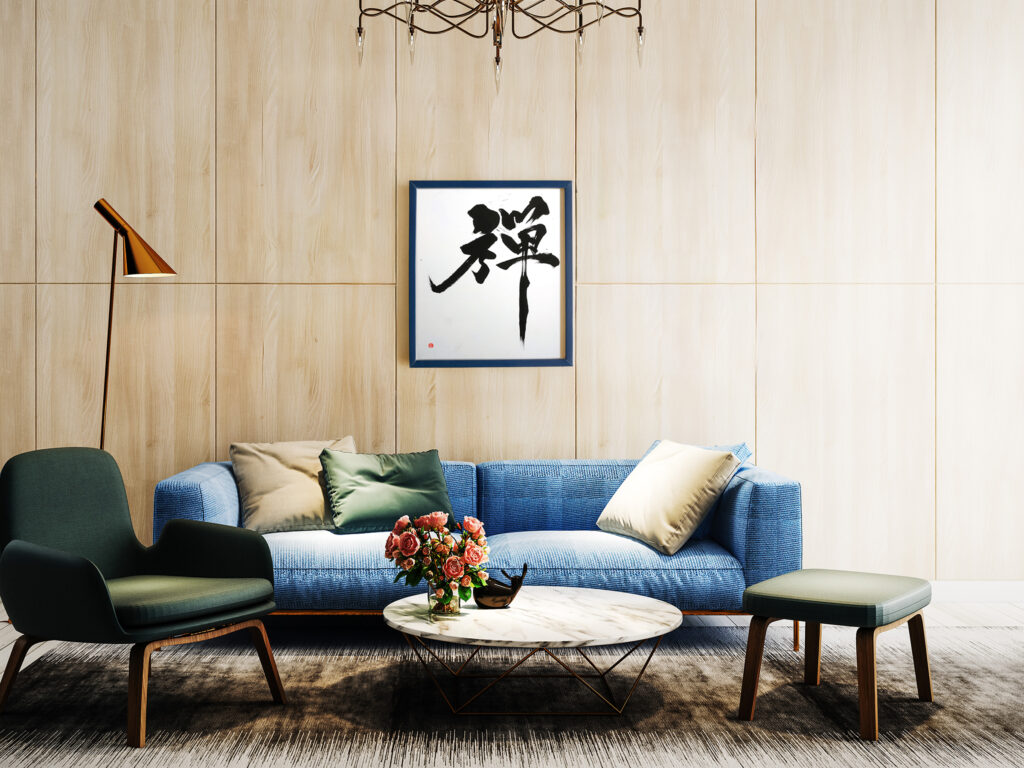
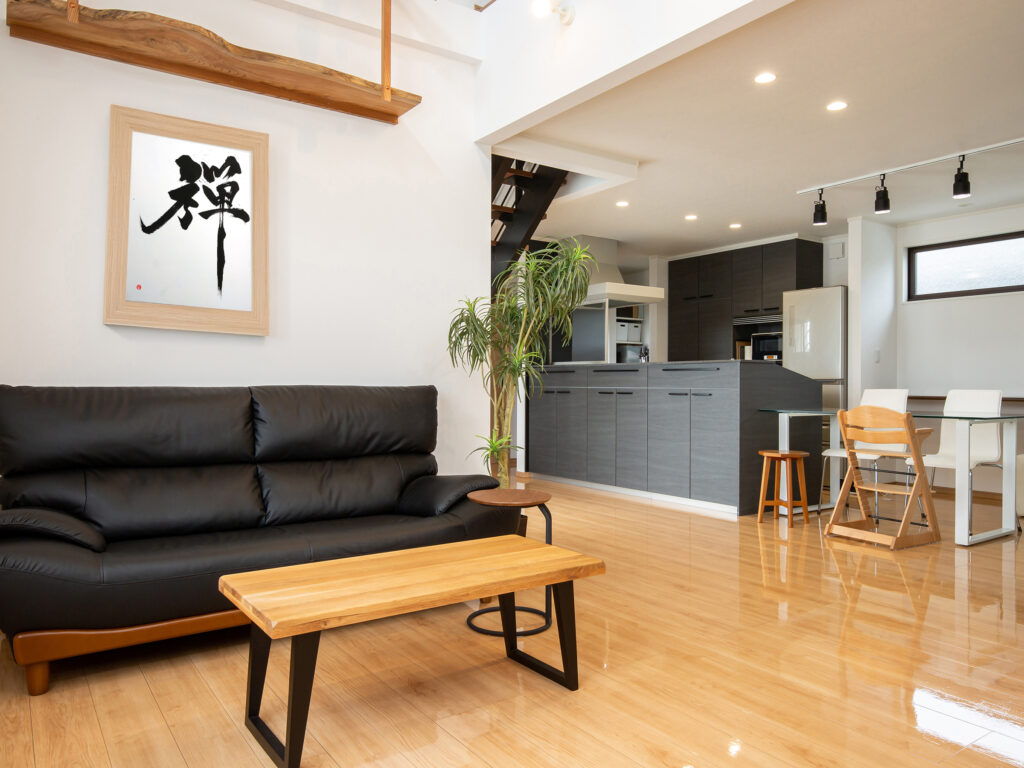
“Zen” has the power to harmonize the space in which it is placed, creating an environment that gently gathers the mind. It is not a decorative object, but an artwork that forms a setting for the inner spirit—a guide that leads one back to the center of the self, which is often lost amid the clamor of daily life.
Read more
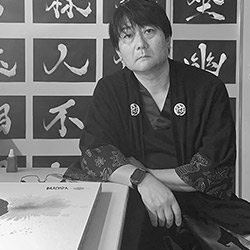
What is MADARA?Pen name: Madara (MADARA) Real Name: I refrain from disclosing my real name in order to focus on my work and concepts. Date of birth: May 6, 1972, Fukushima …
Behind the Scenes
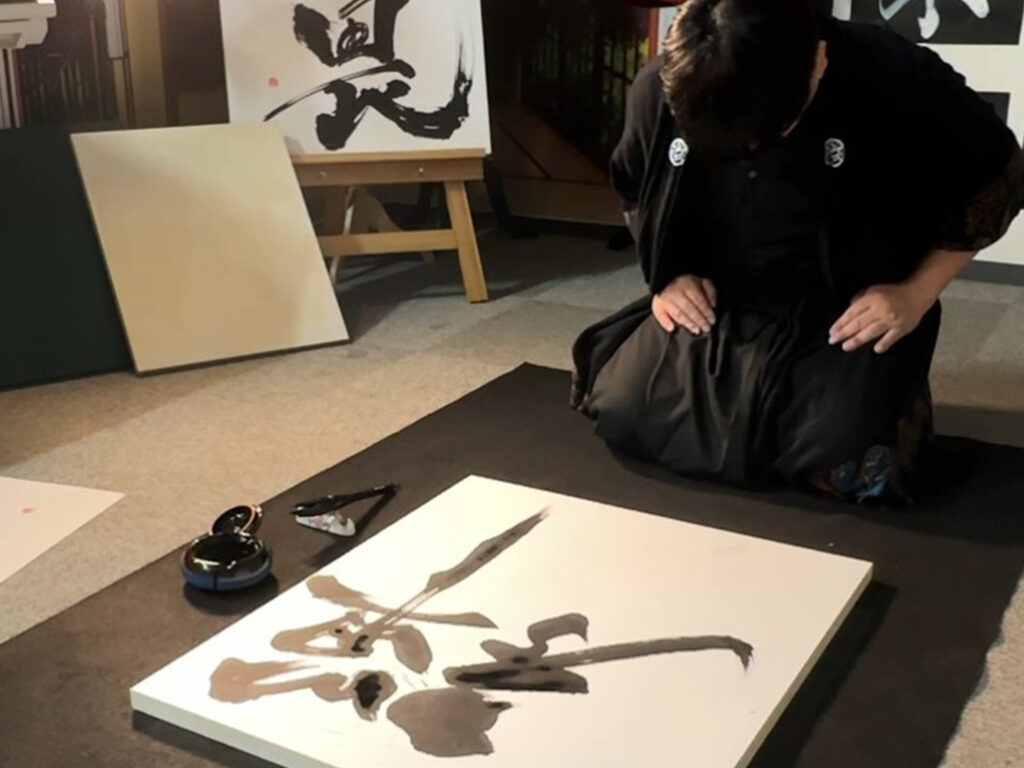
The creation of “Zen” began with multiple layers of gesso applied onto a wood canvas. The white gesso quietly reflected the light, and as the palm moved across the surface, it became gradually smoother. When the gesso dried, the light faded and a matte texture emerged. This groundwork was more than a technical step—it felt like a ritual of preparation, a process of settling the mind, allowing a calm atmosphere to permeate the entire surface.
In the next stage, a large sheet of washi was carefully stretched and applied, ensuring no air was trapped beneath it. At the moment it adhered, the entire surface settled into stillness, like a windless expanse of water. In front of the camera, the tension in the hands contrasted with the quiet surroundings, signaling that the “silent stage” for the brush had now been completed.
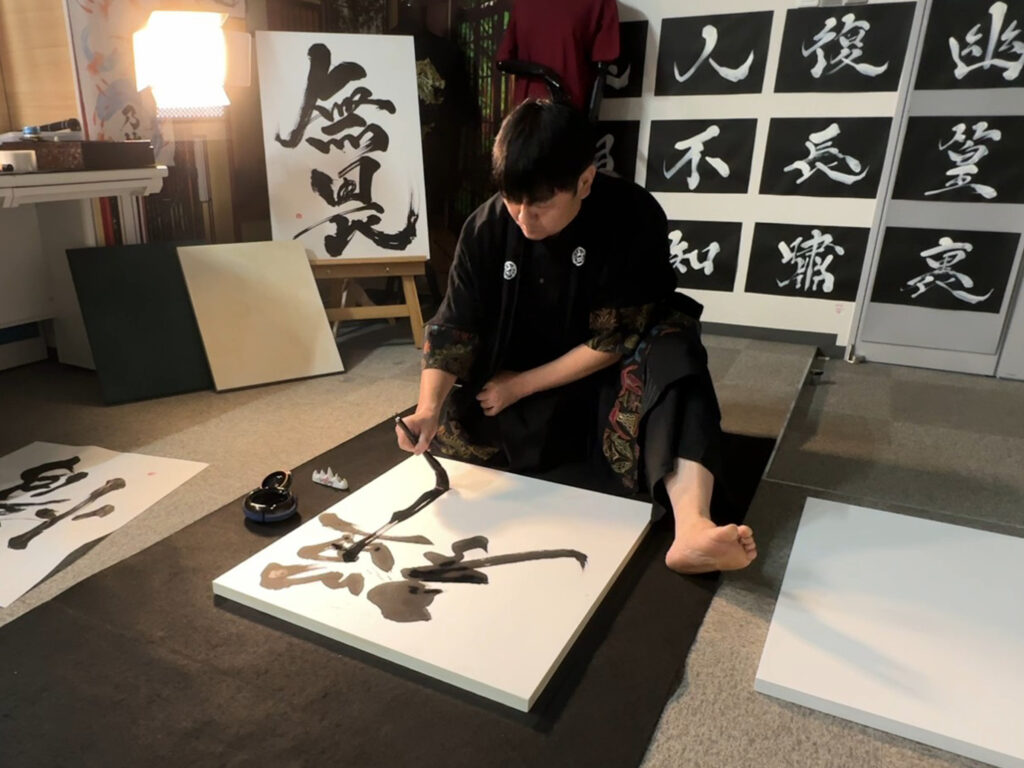
As the brush absorbed the ink, its bristles sank into the black pool, and for a brief moment it felt as though all surrounding sound had vanished. Switching the grip of the brush carried the measured precision of a martial arts form.
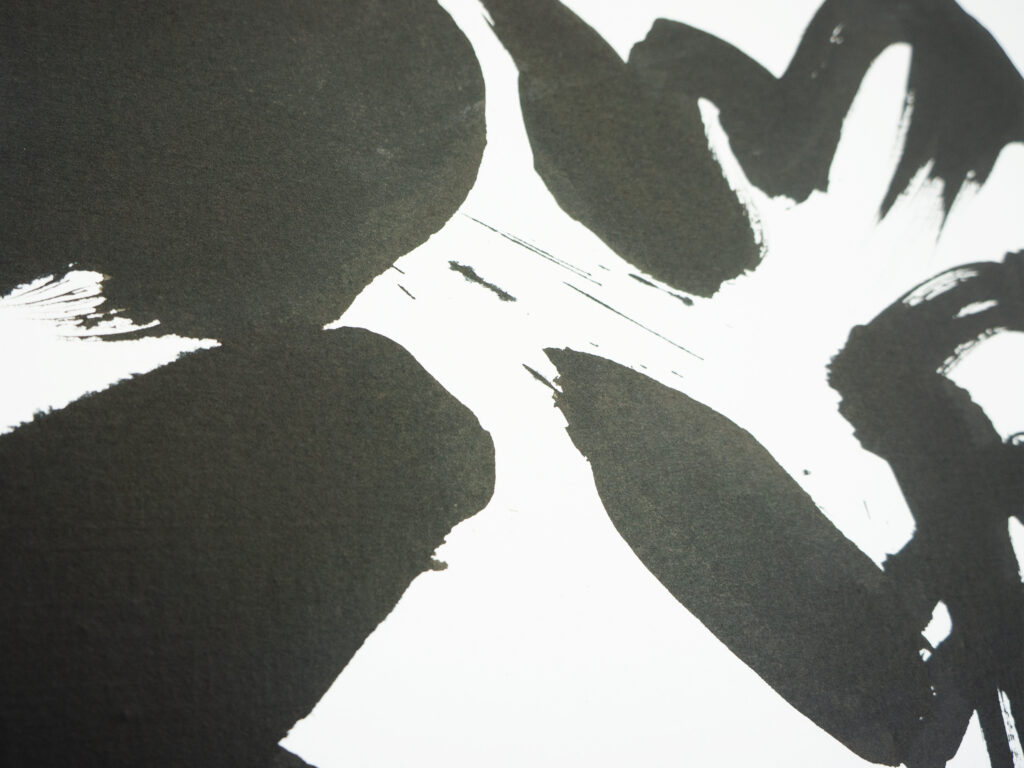
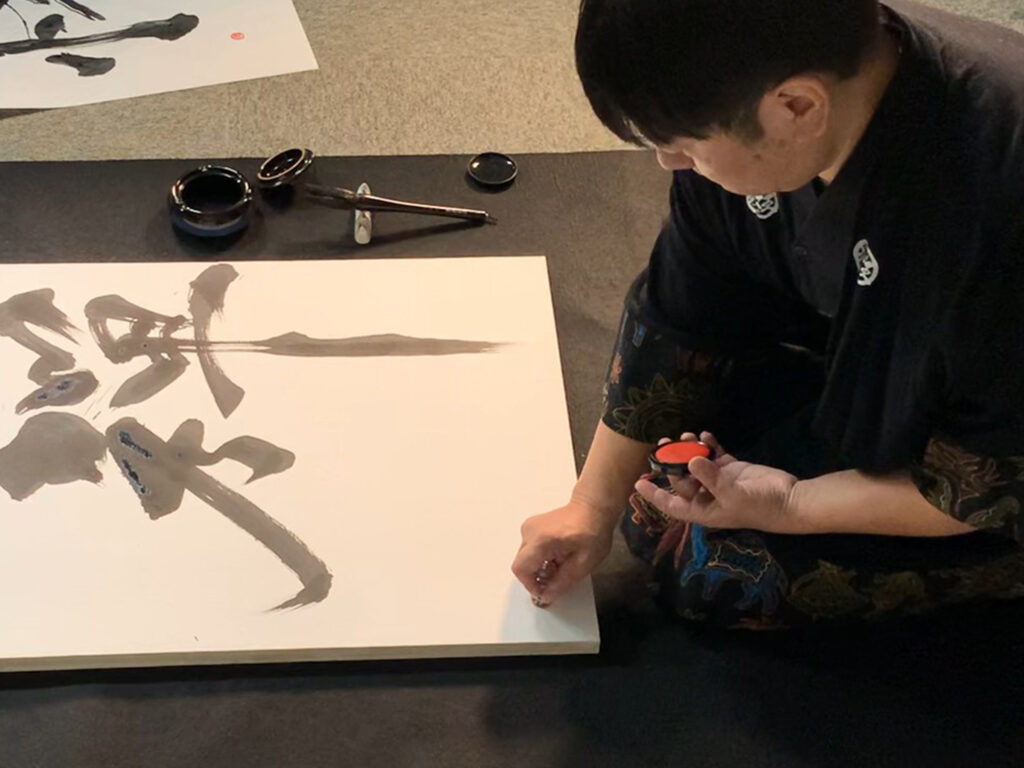
The first stroke was the most intense moment of the entire process. The tip of the brush touched the washi lightly, followed by a single decisive movement that sent a strong vertical line across the surface. With each advance of the brush, the paper responded with a faint tremor, and the ink spread subtly—forming a straight line that seemed to possess intention of its own.
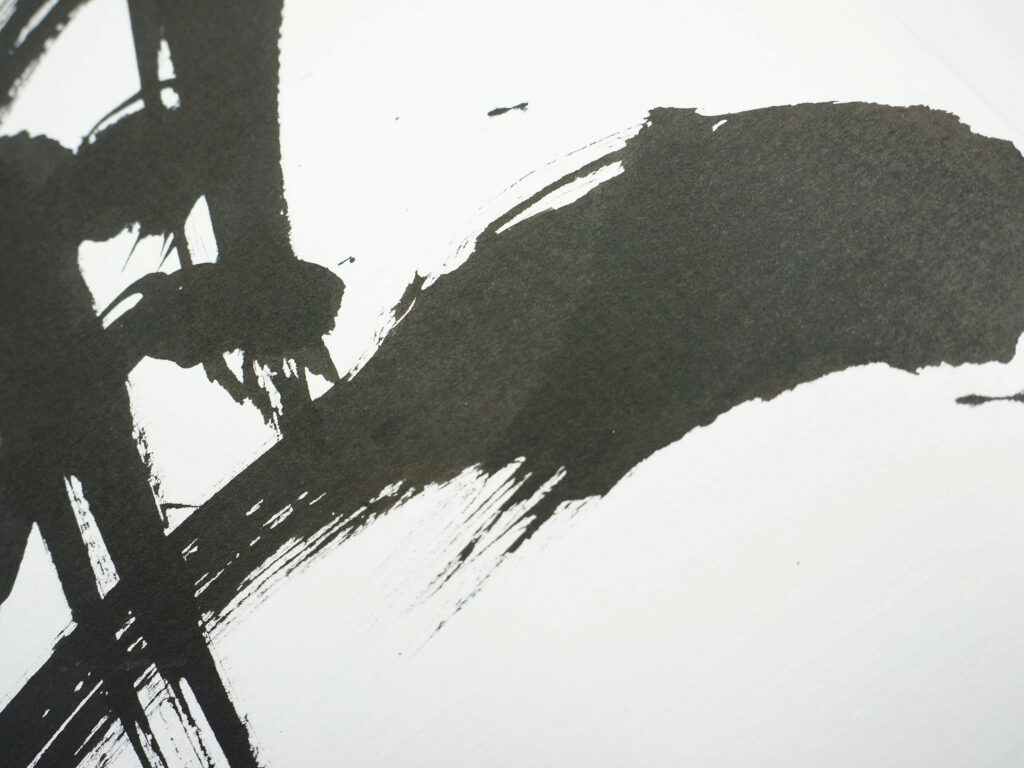
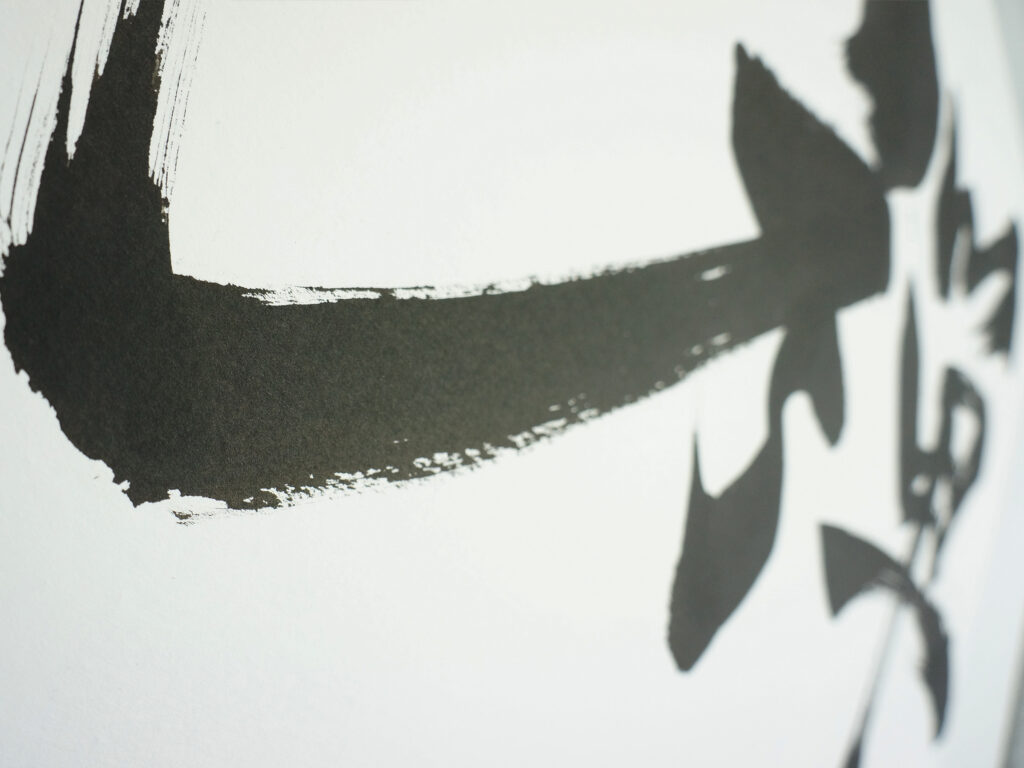
The next horizontal stroke moved gently, creating a soft expansion that supported and embraced the main line without resistance. The motion was wide and connected—shoulder to arm, arm to wrist, wrist to the brush tip—becoming a single unified flow.
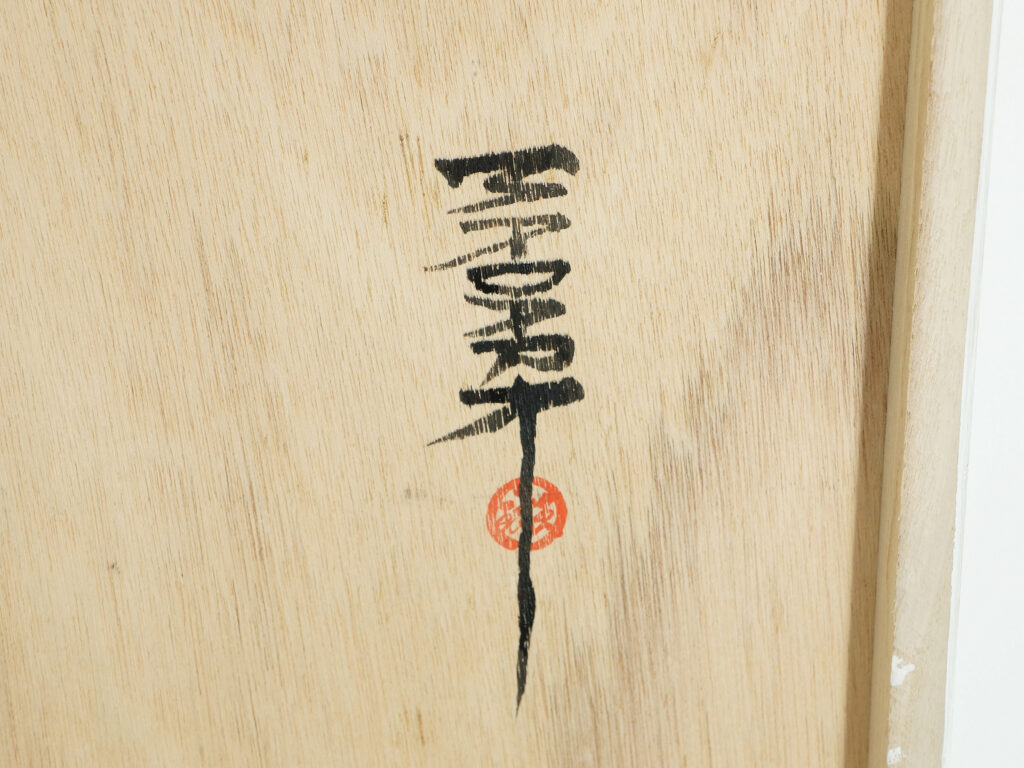
In the instant after the final stroke, a palpable tension filled the air. The brush was lifted while holding the breath, completing the final gesture. Adding the red seal required great care, and with its imprint, the work seemed to draw breath and come alive.
When the finished “Zen” stood in the studio’s light, the contrast between the deep black ink and the softness of the washi revealed itself with striking clarity. The piece radiated both quiet stillness and a tightly held intensity, capturing the moment when human awareness settles into a deeper calm.
Kanji meaning
“Zen” – Meaning and Structure Within the Character
1. Structural Composition
Zen = 礻 (shimesu-hen) + 単 (tan)
■ 礻 (Shimesu-hen)
This radical originates from a pictograph representing an altar where offerings were placed before the gods. Its foundational meanings include:
prayer
spirituality
sacredness
ritual
In calligraphy, shimesu-hen often symbolizes “respect,” “composure,” and the “spiritual axis” through the movement from the entry of the brush to the final sweep.
■ 単 (tan)
Originally, this character represents “one unified thing,” “simplicity,” and “a state free of excess.” It also conveys the ideas of:
focused concentration
a mind directed toward a single point
The use of 単 in “禅” aligns deeply with Zen philosophy:
clarity and purity
awareness gathered into one point
removal of the unnecessary
■ Symbolic Layers of the Character “禅”
The meaning of “禅” can be organized into the following three layers:
1. Symbol of Spirituality
Because it contains 礻, the character has long been associated with:
prayer
spirituality
silence
sacredness
2. Concentration and Return to Essence
The right component, 単, symbolizes:
focusing on one essential core
a state stripped of excess
These meanings directly correspond to Zen philosophy itself.
3. Symbolic Role in Calligraphy
When writing “禅” in calligraphy, its structure tends to embody the following meanings:
Vertical stroke: pillar of spirit
Horizontal expansion: acceptance and stillness
White space: emptiness, nothingness, quiet
Forceful initial stroke: moment of cutting through hesitation
Calm final stroke: returning inward
In essence, this kanji is constructed in a way that allows each stroke to become an expression of the movement of the mind itself.
Work details
item
Content
The basis of the work
Wood Campus
Material
wood, Japanese paper(Washi)
Size
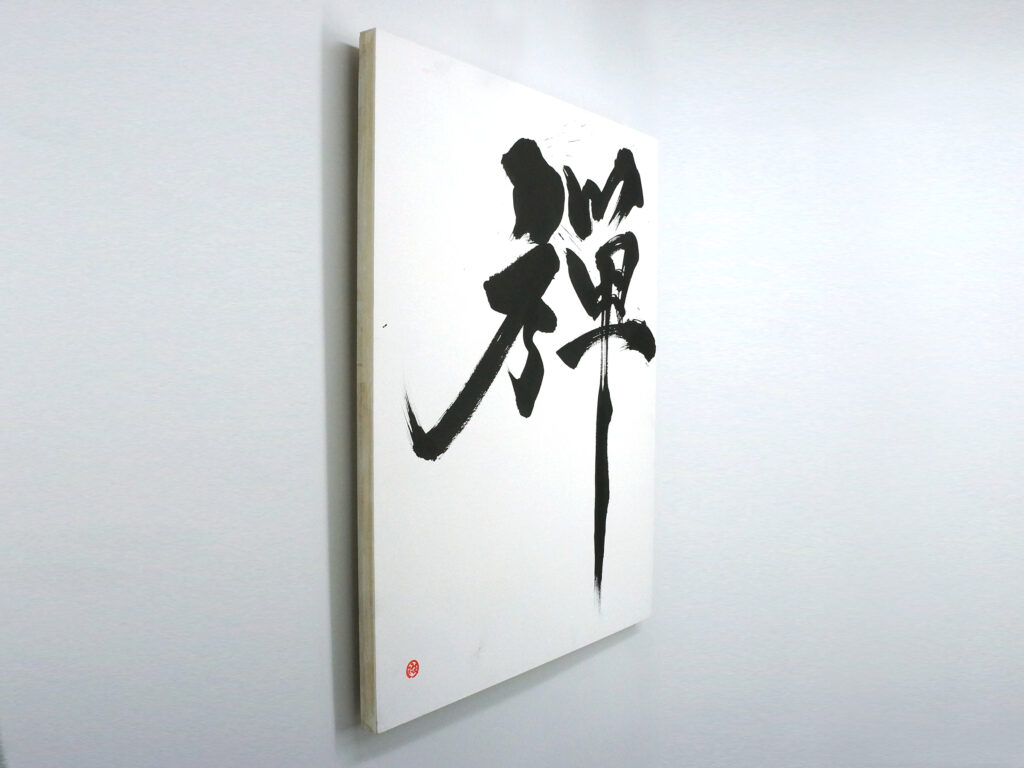
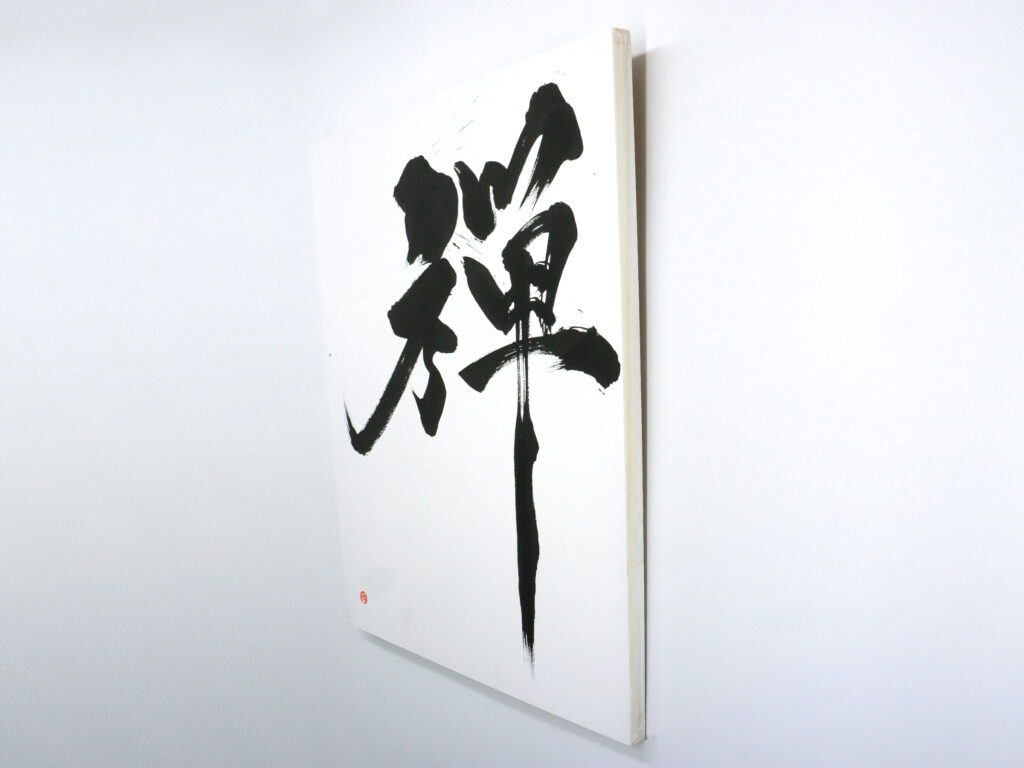
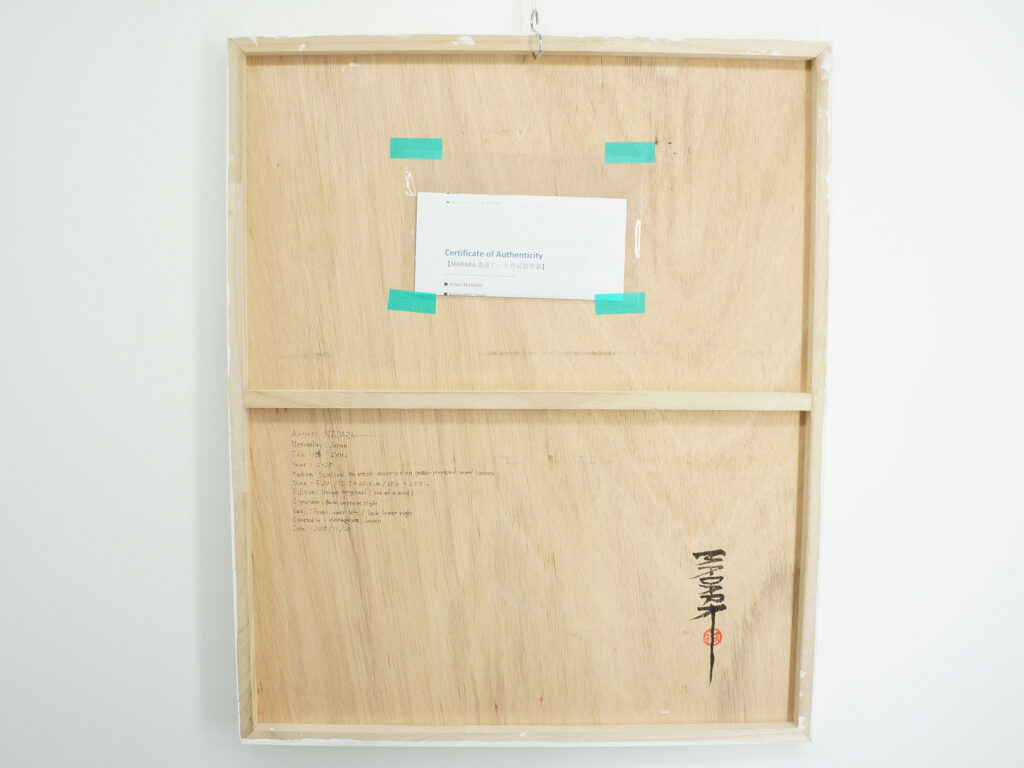
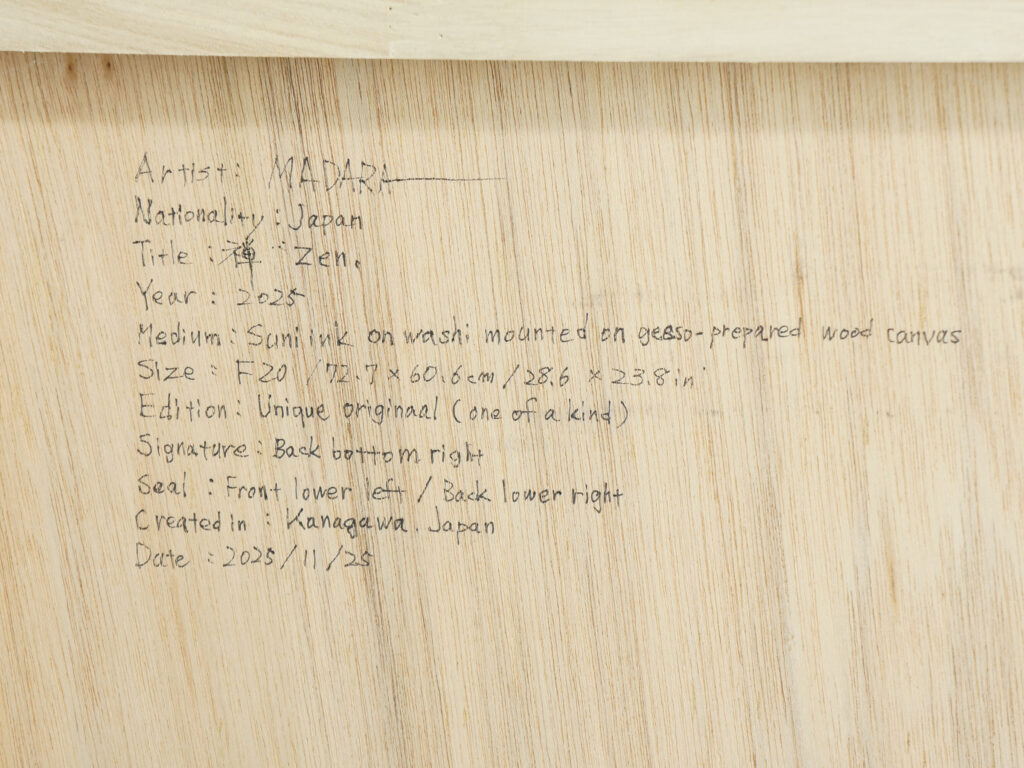
F20 28.6in(727mm) × 23.8in(606mm)×0.98in(25mm)
Materials used
Sumi-ink
Finishing the work
The wooden canvas is primed with gesso, calligraphy paper (washi paper) is pasted on top, and the painting is finished with ink.
Regarding domestic and international shipping
・International shipping available: Ships via FedEx if no designated shipping company is specified. ・Domestic shipping in Japan: Ships via Yamato Transport if no designated shipping company is specified.
Packaging at time of shipment
We can also accommodate requests for packaging such as simple packaging and heavy-duty packaging, so please contact us for details.
Shipping
Decisions will be made in consultation with the buyer, such as using transportation suitable for art works and taking out insurance.
Compensation for works
The artwork will be delivered in the same condition as when it was sold. If you would like to purchase art insurance, we are happy to discuss this.
Payment Method
The payment amount is the artwork price plus shipping. Payment can be made by credit card.
Artwork Storage and Handling
At our studio, each artwork is carefully wrapped individually in Japanese washi paper and stored in a climate-controlled room where temperature and humidity are kept stable at all times. The artworks are preserved in an environment protected from light, moisture, and dust, ensuring they remain in optimal condition until delivery.
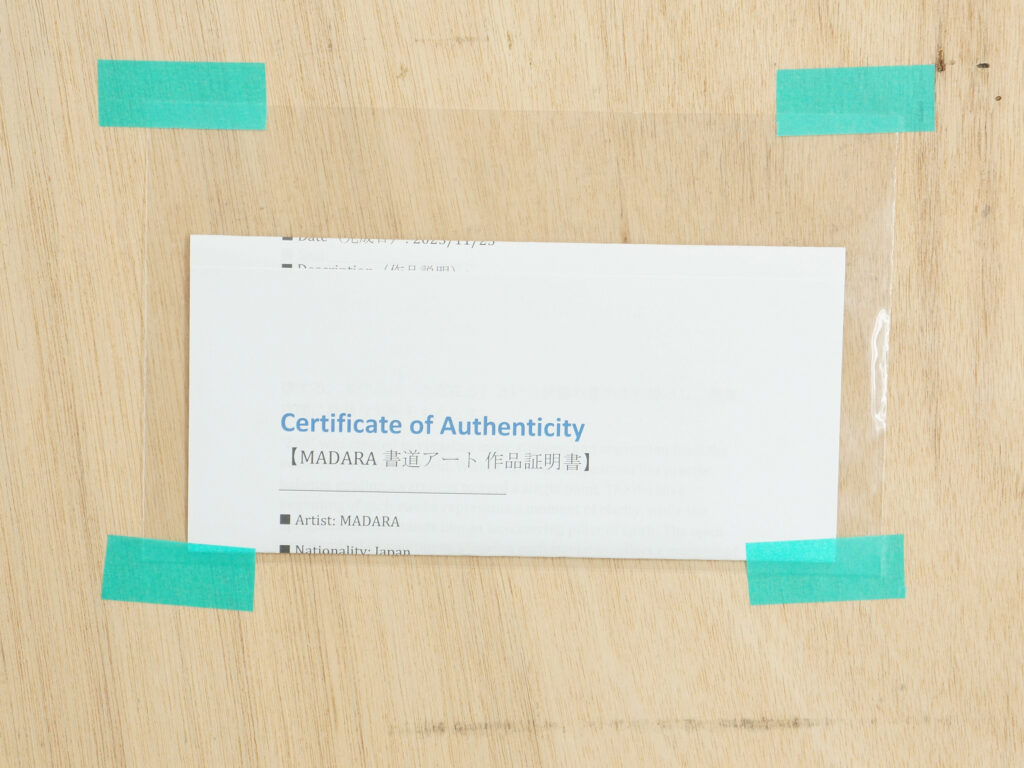
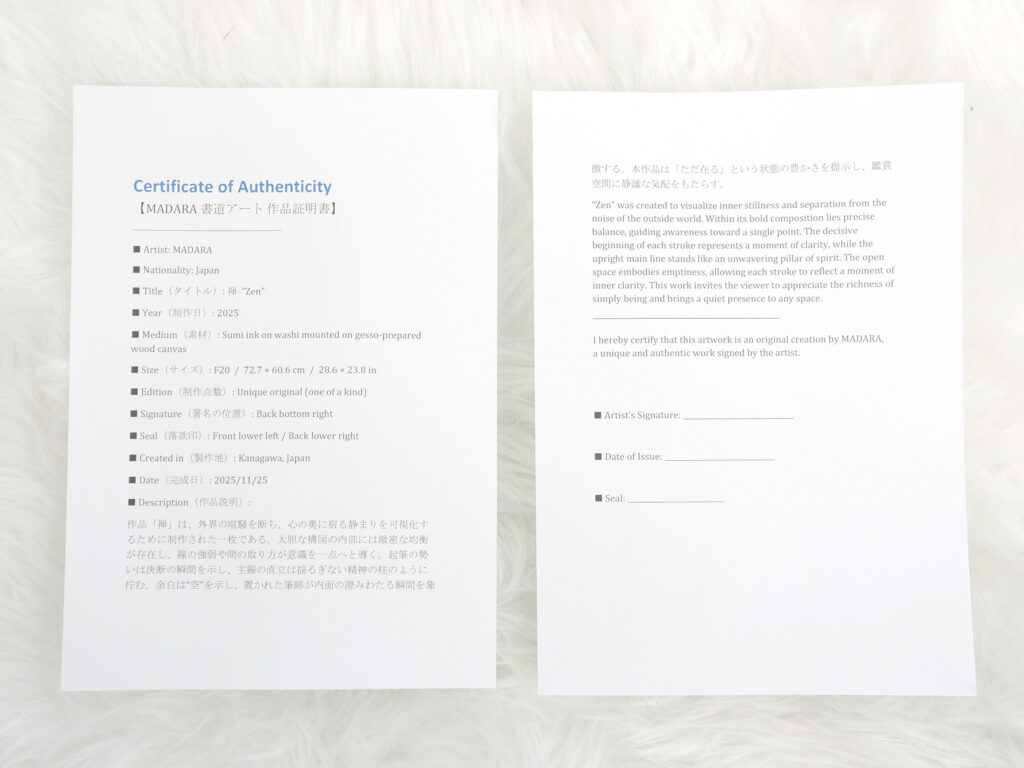
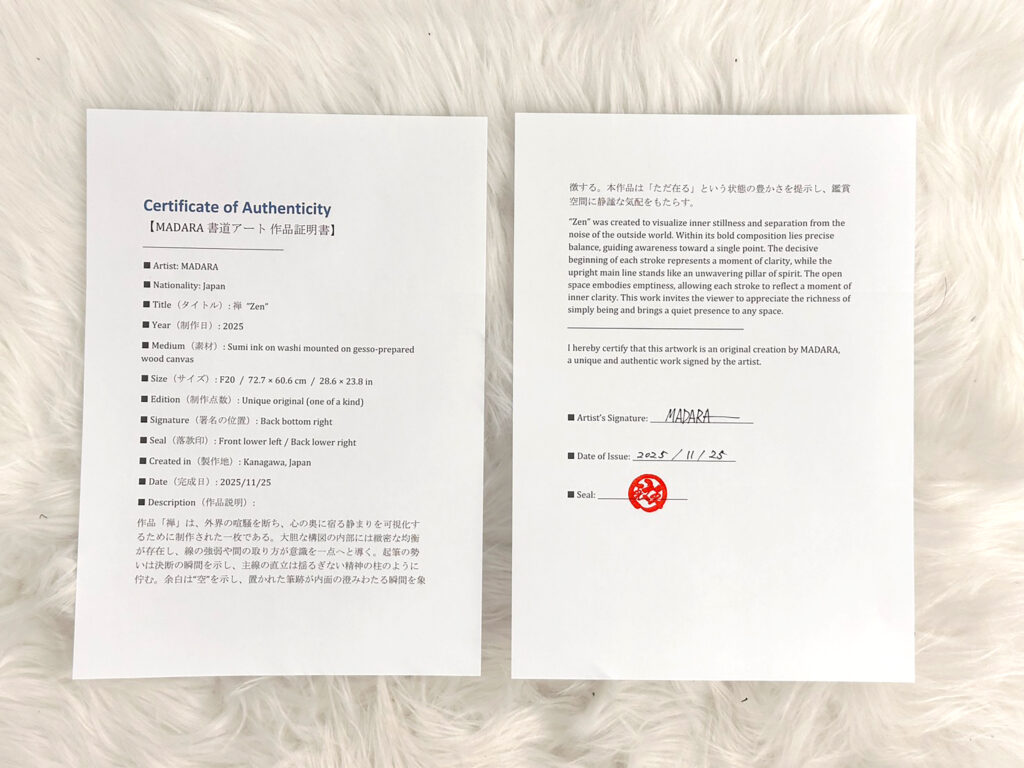
After purchase, each piece is prepared with specialized protective packaging and shipped with the highest priority placed on safety, both domestically and internationally. A Certificate of Authenticity is included with every artwork.