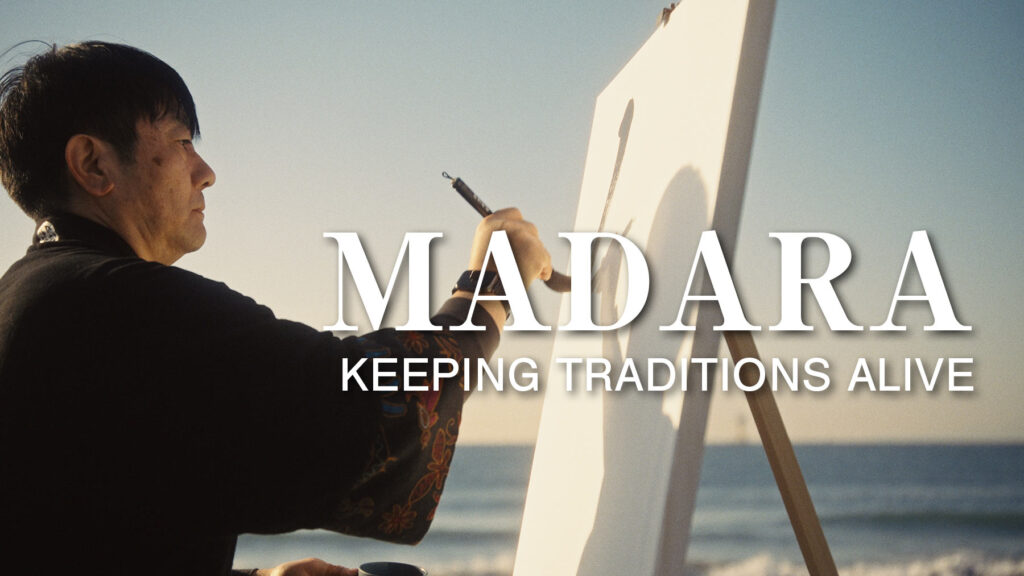
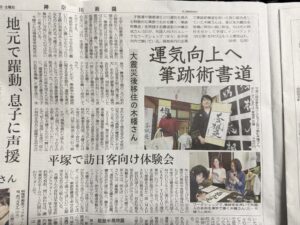
As Featured in Kanagawa Shimbun | Hisseki-jutsu Calligraphy by Madara
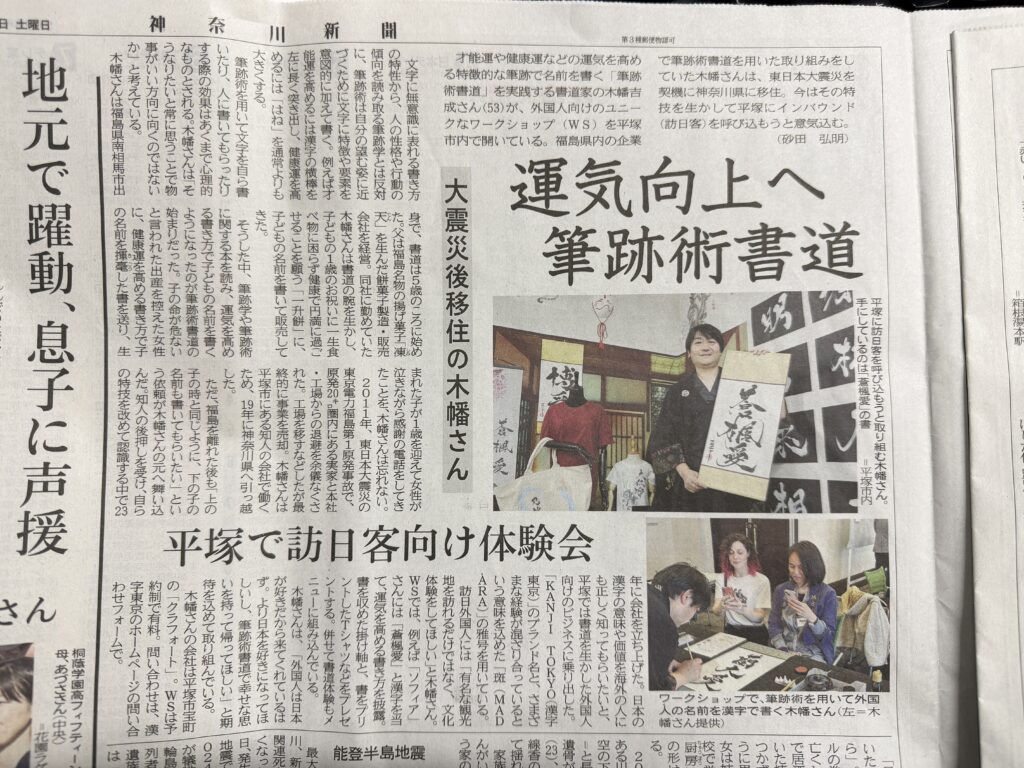
I am honored to share that my work has recently been featured in Kanagawa Shimbun, one of the leading regional newspapers in Kanagawa.
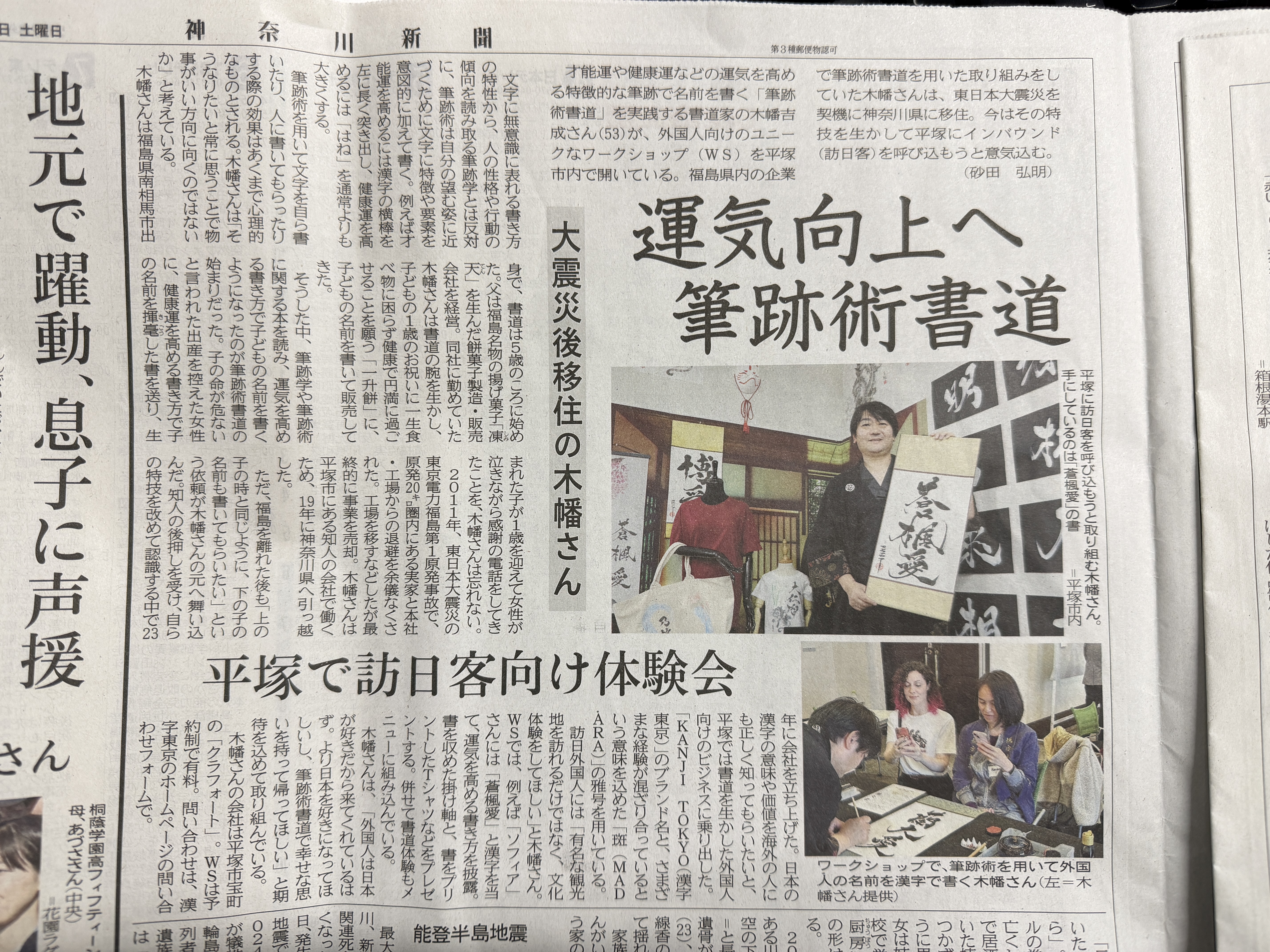
The article introduces my approach to Hisseki-jutsu Calligraphy, as well as the calligraphy workshops for international visitors that I host in Hiratsuka. It also touches on my journey after relocating to Kanagawa following the earthquake, and my ongoing efforts to share Japanese culture with people from around the world.
For me, calligraphy is not only about writing beautiful characters. It is a way to reflect on oneself, to give form to intention, and to connect mind and movement through the brush. Being able to offer this experience to visitors from overseas has been an important part of my work.
I am truly grateful that these activities were recognized and shared through a local newspaper. From Hiratsuka, I will continue to carefully and sincerely convey the depth of Japanese culture and the quiet power that lives within written characters.
Thank you very much for your continued support.
Below is the English translation of the newspaper article:
Toward Improving Good Fortune: Hisseki-jutsu Calligraphy
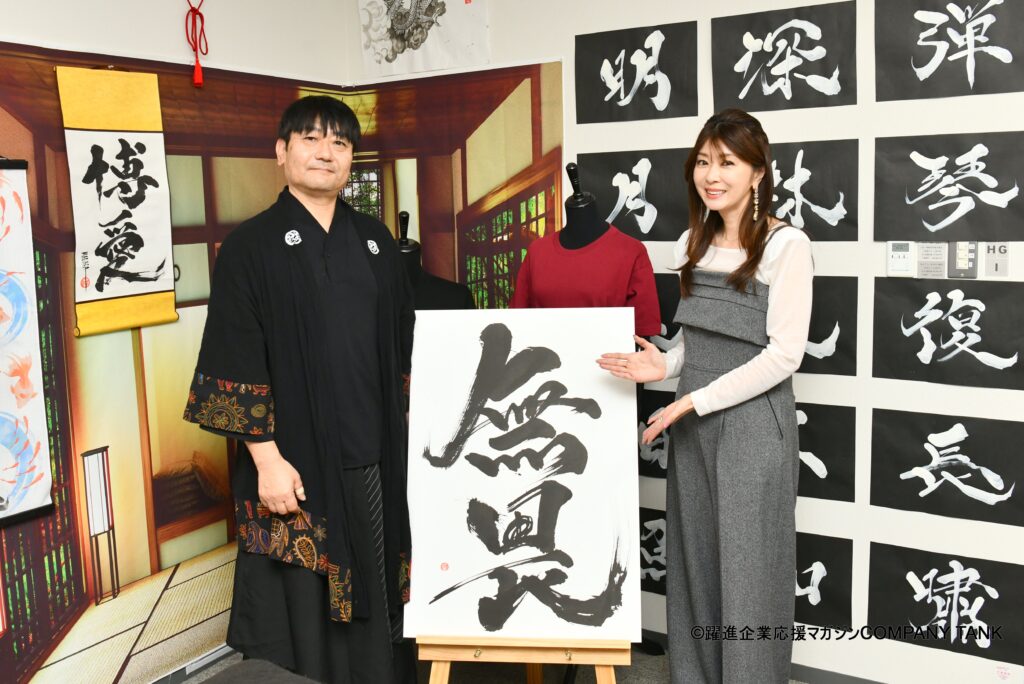
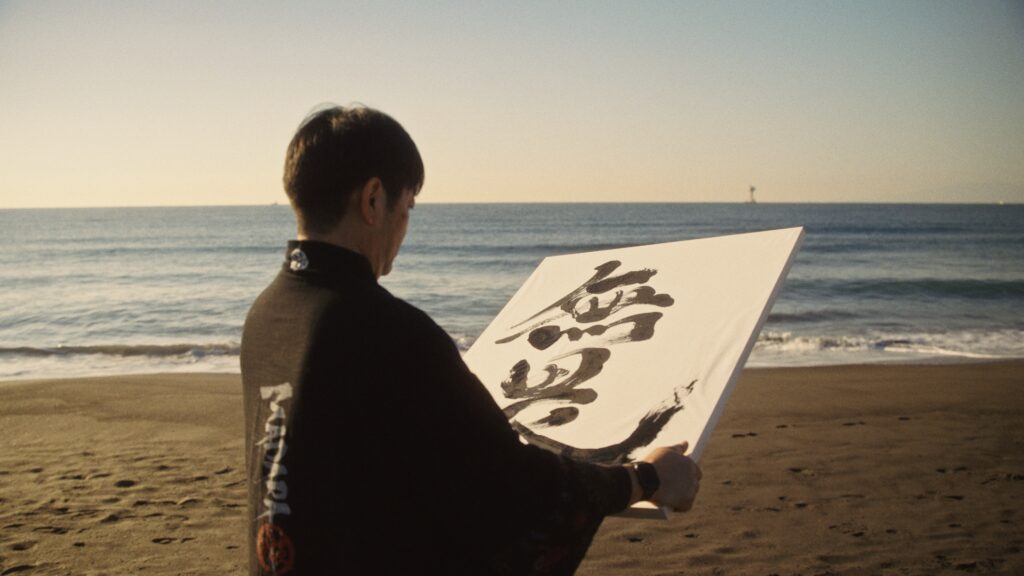
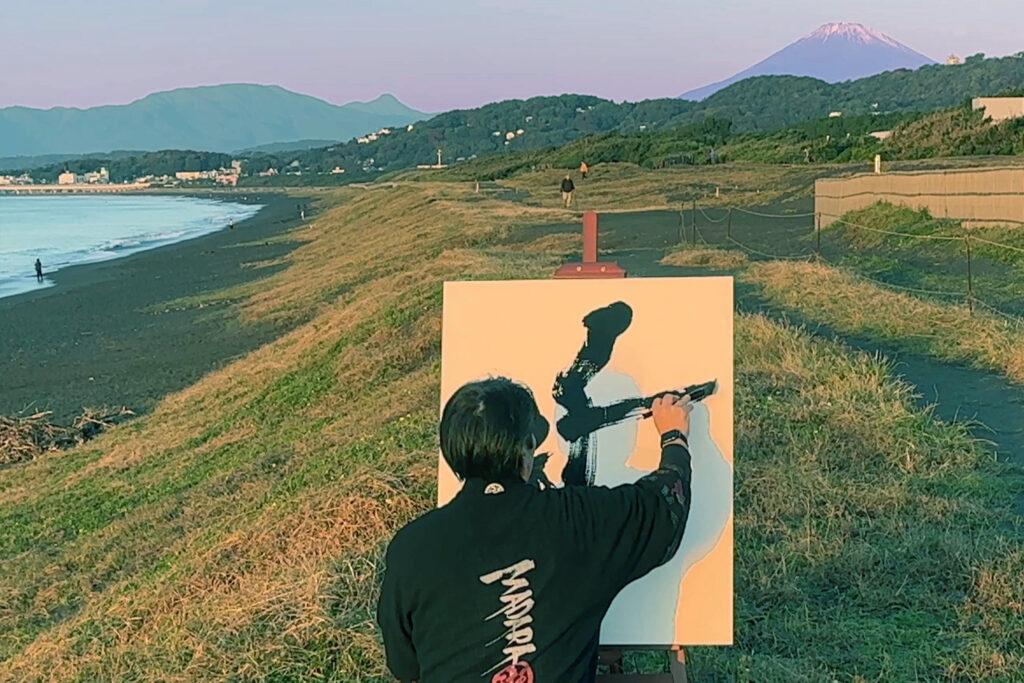
MADARA (53), a calligraphy artist who practices “Hisseki-jutsu Calligraphy”—a unique method of writing names with distinctive brushstrokes believed to enhance good fortune such as talent and health—has been holding workshops for international visitors in Hiratsuka City.
MADARA previously worked with companies in Fukushima Prefecture, applying Hisseki-jutsu Calligraphy in various initiatives. Following the Great East Japan Earthquake, he relocated to Kanagawa Prefecture. Today, he is determined to make use of his specialized skills to attract inbound tourism to Hiratsuka.
(Hiroaki Sunada)
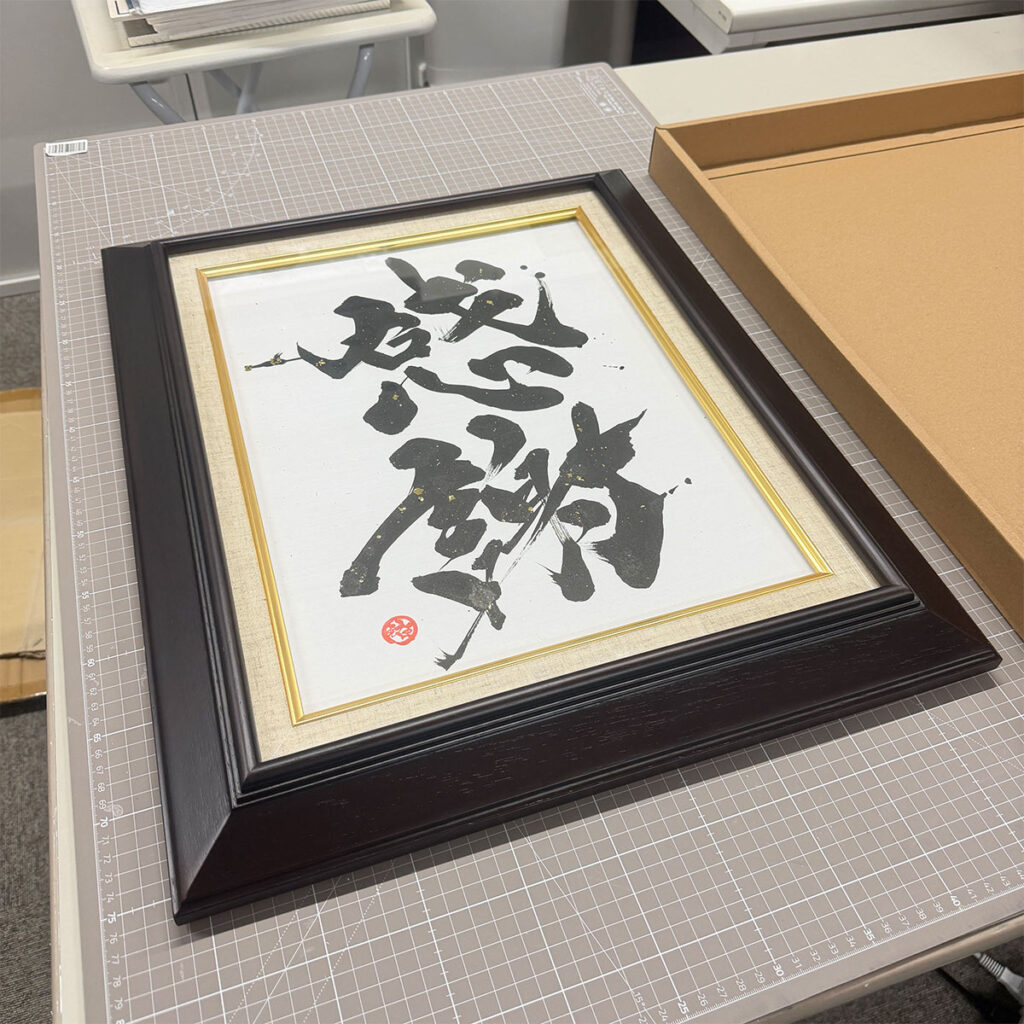
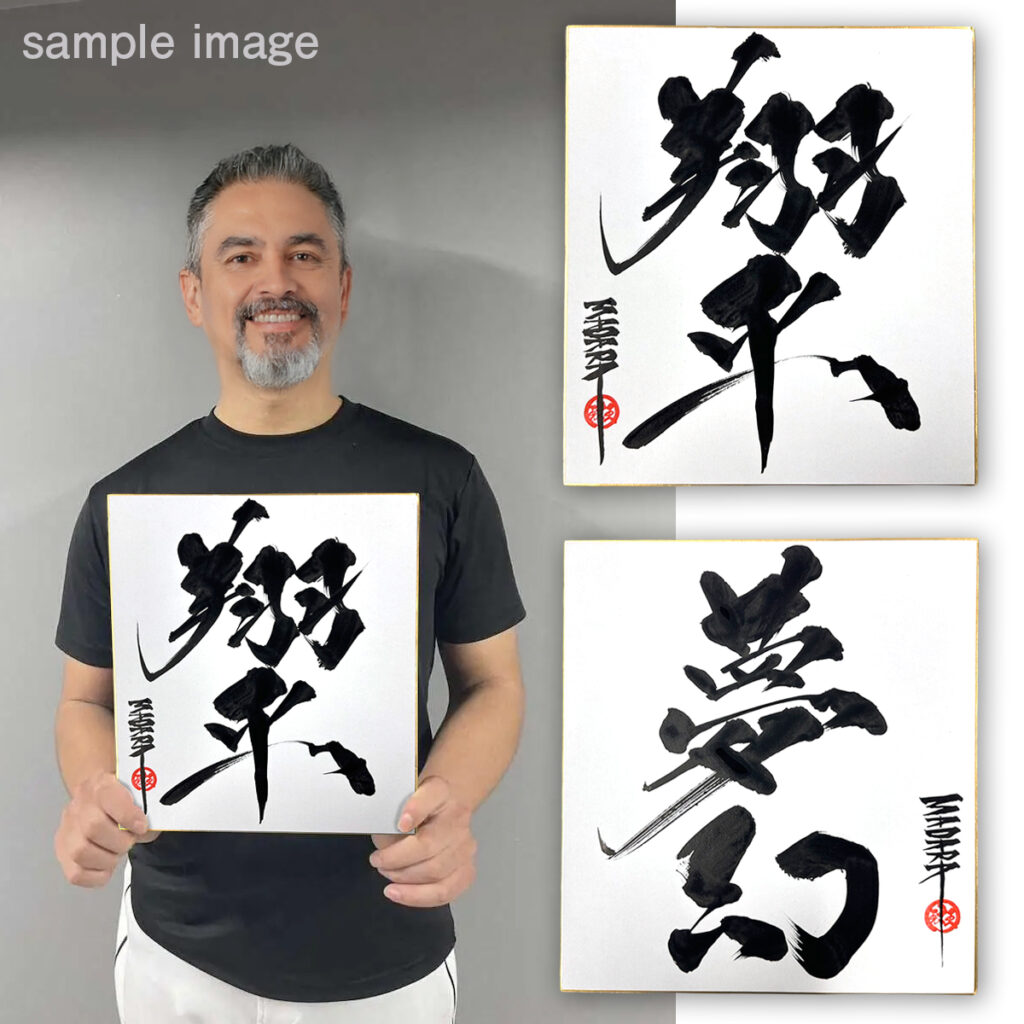
Rather than analyzing handwriting to read a person’s character and behavioral tendencies from unconscious traits in their writing, Hisseki-jutsu focuses on intentionally adding specific elements to characters in order to move closer to one’s desired self. For example, extending the horizontal strokes of kanji further to the left is believed to enhance talent-related fortune, while making the “hane” (upward flicks) larger than usual is said to improve health-related fortune.
The effects of writing characters oneself using Hisseki-jutsu, or having someone else write them, are considered psychological in nature. MADARA believes that “by constantly holding an image of who you want to become, things may begin to move in a positive direction.”
MADARA is originally from Minamisoma City in Fukushima Prefecture. He began practicing calligraphy at the age of five. His father ran a company that manufactured and sold traditional rice sweets and was the creator of Fukushima’s famous fried confection known as Doten. MADARA also worked for the family company.
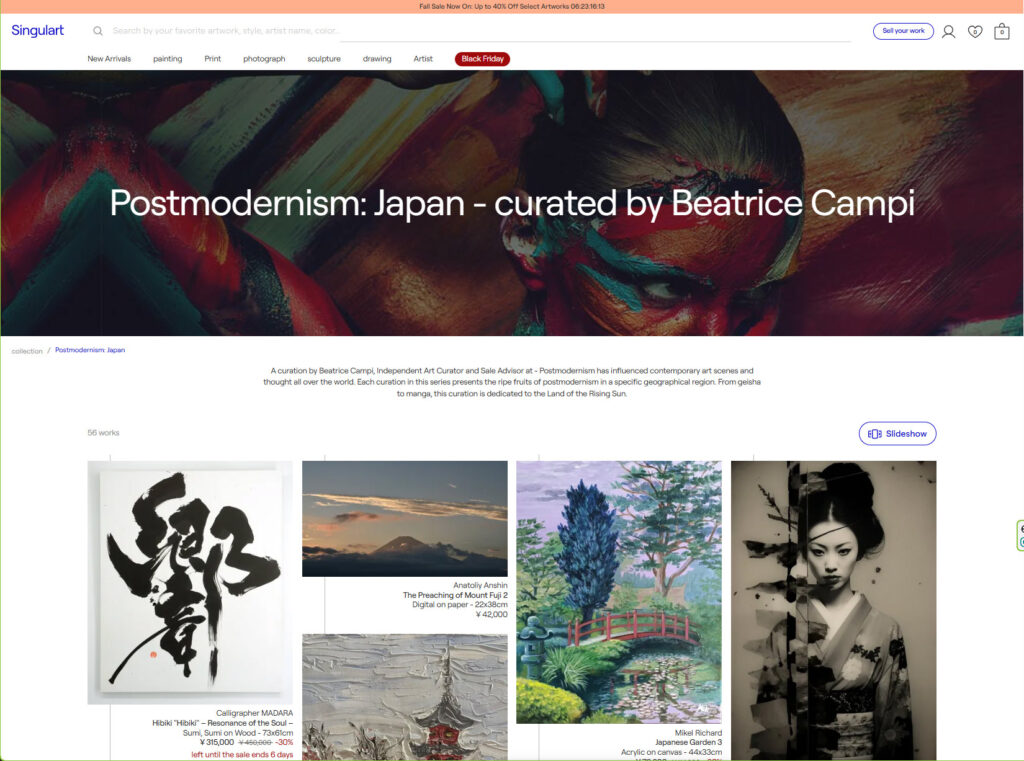
Using his calligraphy skills, MADARA began selling works in which he wrote children’s names on Issho-mochi—rice cakes used to celebrate a child’s first birthday, symbolizing a wish for lifelong health, abundance, and harmony.
During this time, he read books on handwriting analysis and Hisseki-jutsu, and started writing children’s names using styles believed to enhance good fortune. This marked the beginning of his Hisseki-jutsu calligraphy practice. He recalls writing a child’s name in a style intended to improve health-related fortune for a woman facing a high-risk childbirth. When the child later reached their first birthday, the woman called him in tears to express her gratitude—an experience he has never forgotten.
In 2011, following the nuclear accident caused by the Great East Japan Earthquake, MADARA was forced to evacuate from his family home, headquarters, and factory located within the 20-kilometer evacuation zone. Although efforts were made to relocate the factory, the business was ultimately sold. In 2019, MADARA moved to Kanagawa Prefecture and began working at a friend’s company in Hiratsuka City.
Even after leaving Fukushima, requests continued to reach him from former clients, such as parents asking him to write names for their younger children just as he had done for their firstborns. Encouraged by acquaintances and reawakening to the value of his own skills, MADARA became independent in 2023.
Workshops for International Visitors in Hiratsuka
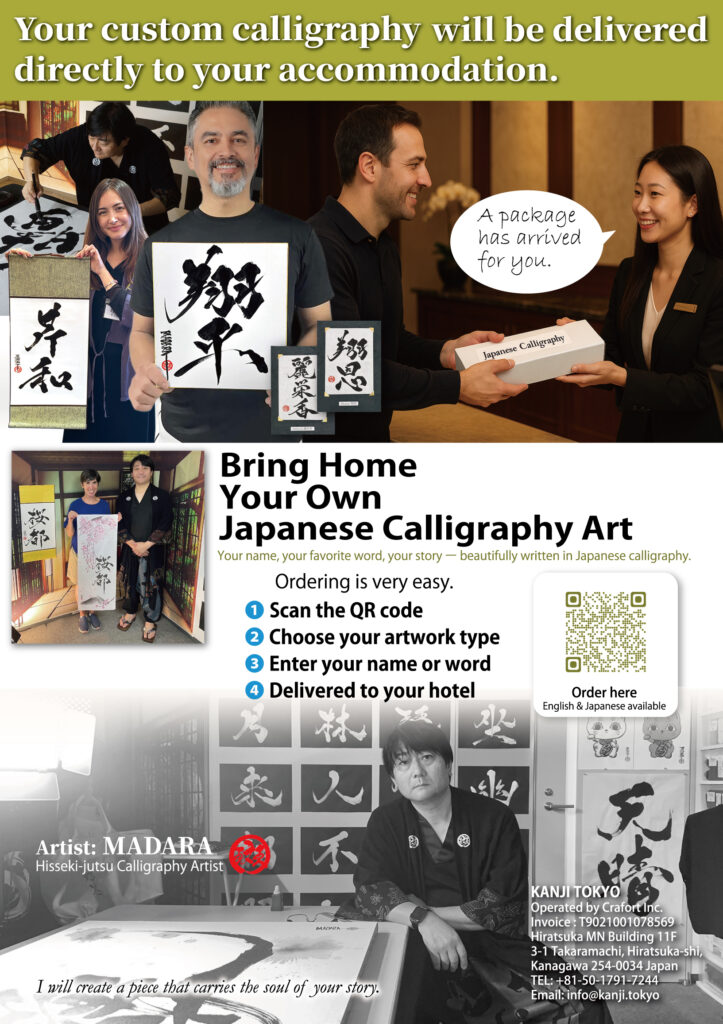
With the aim of helping people from overseas correctly understand the meaning and value of Japanese kanji, a calligraphy-based business for international visitors has been launched in Hiratsuka. Operating under the brand name KANJI TOKYO, the artist uses the name MADARA, which expresses the idea of diverse experiences coming together.
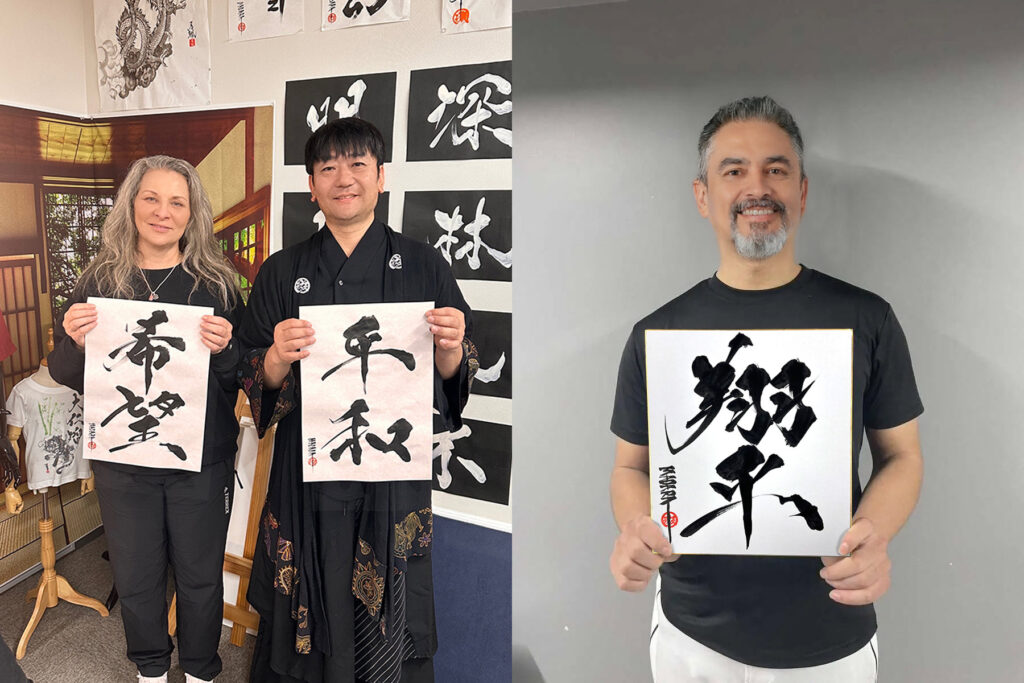
MADARA encourages visitors to Japan not only to see famous tourist sites, but also to experience Japanese culture firsthand. In the workshops, participants are introduced to kanji characters imbued with meaning—such as “Love” (愛) or “Fire” (炎)—and are shown writing techniques believed to enhance good fortune. Calligraphy practice is also included as part of the program.
“People from overseas come to Japan because they love the country,” says MADARA. “I want them to love Japan even more, and to take home happy memories through Hisseki-jutsu calligraphy.”
MADARA’s company, Crafort, is located in Murota, Hiratsuka City. The workshops are held by reservation and require a fee. Inquiries can be made through the contact form on the KANJI TOKYO website.
Photo Caption
MADARA (left) writes a participant’s name in kanji using Hisseki-jutsu during a workshop for international visitors in Hiratsuka City.