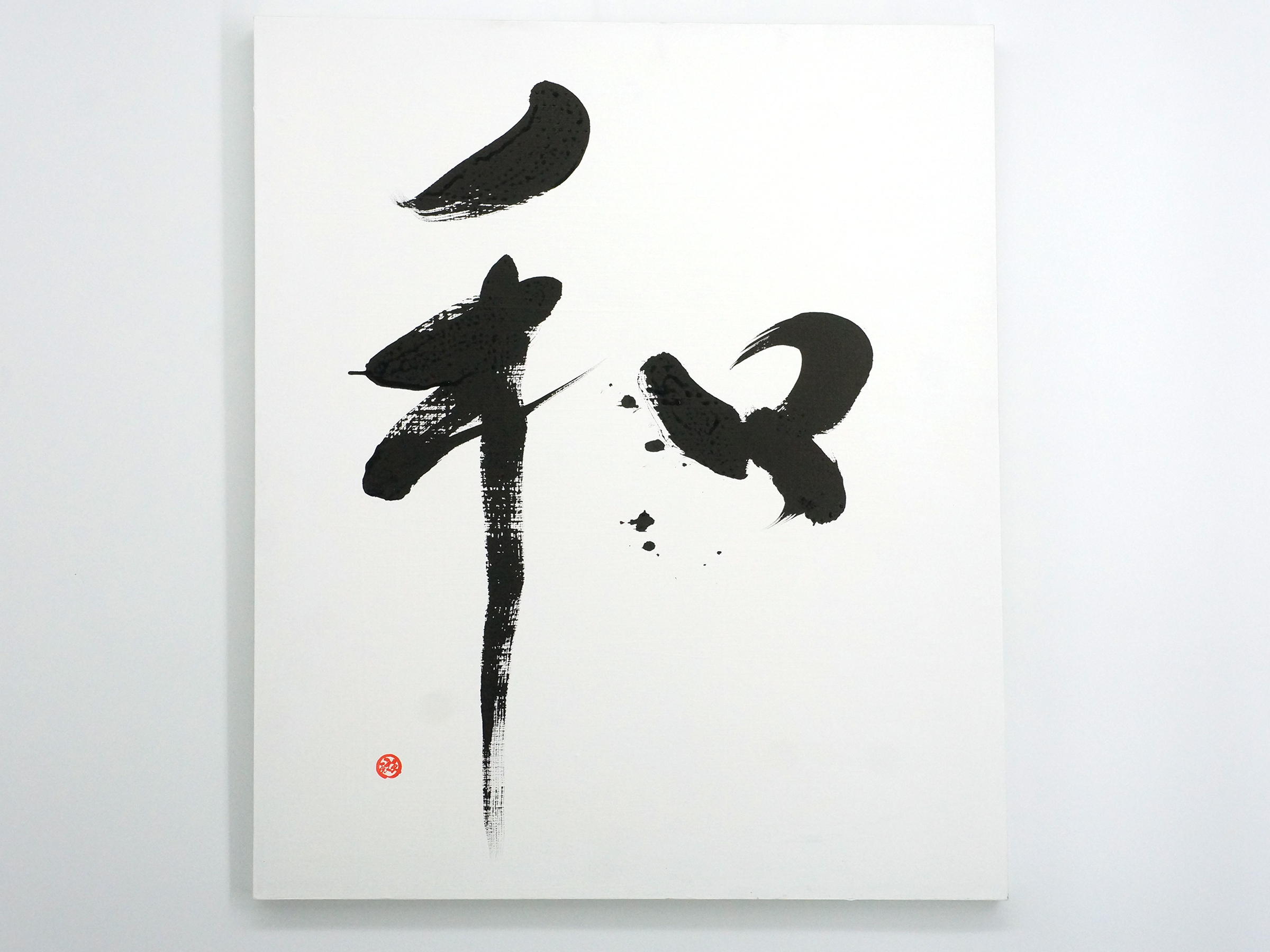
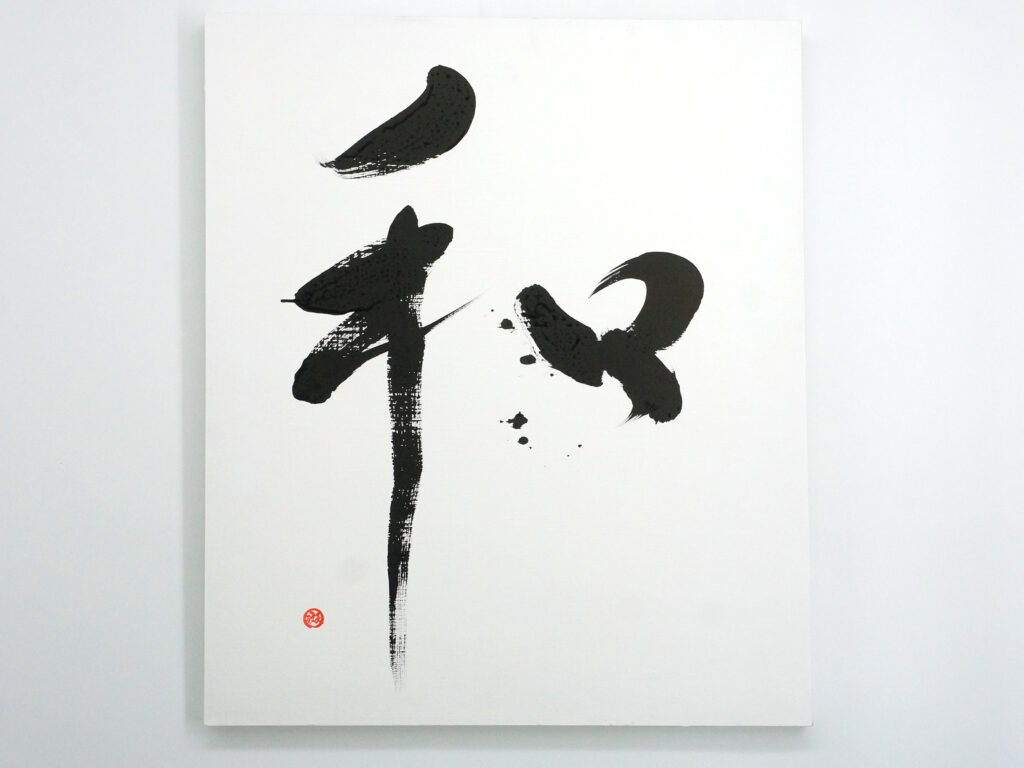
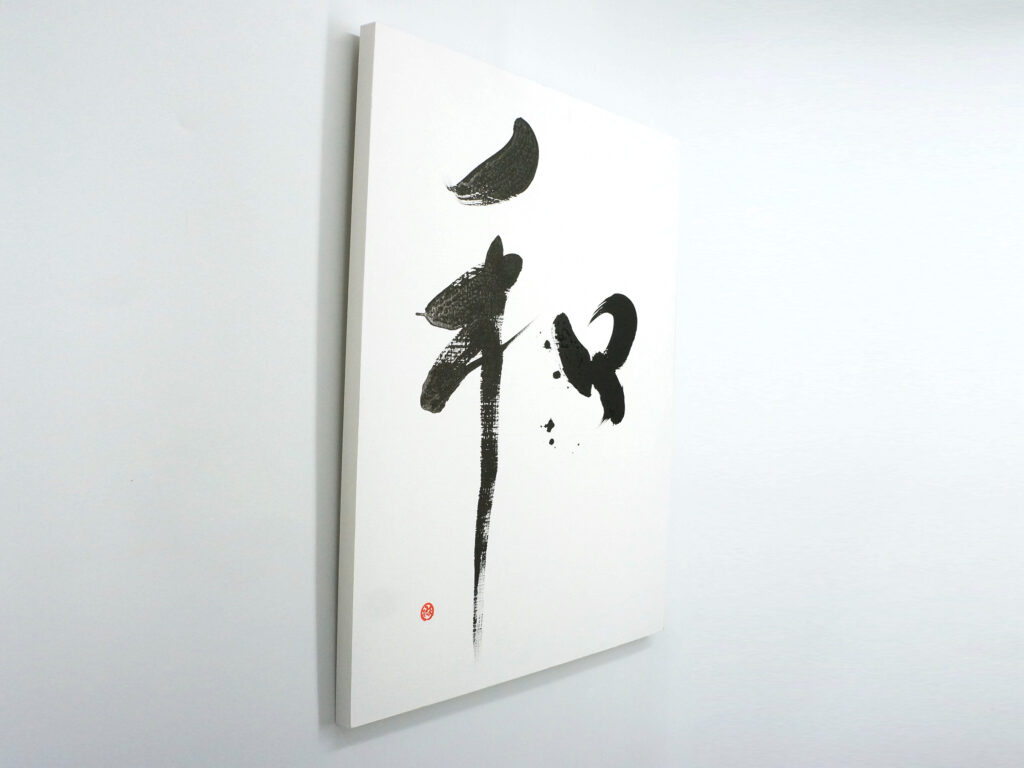
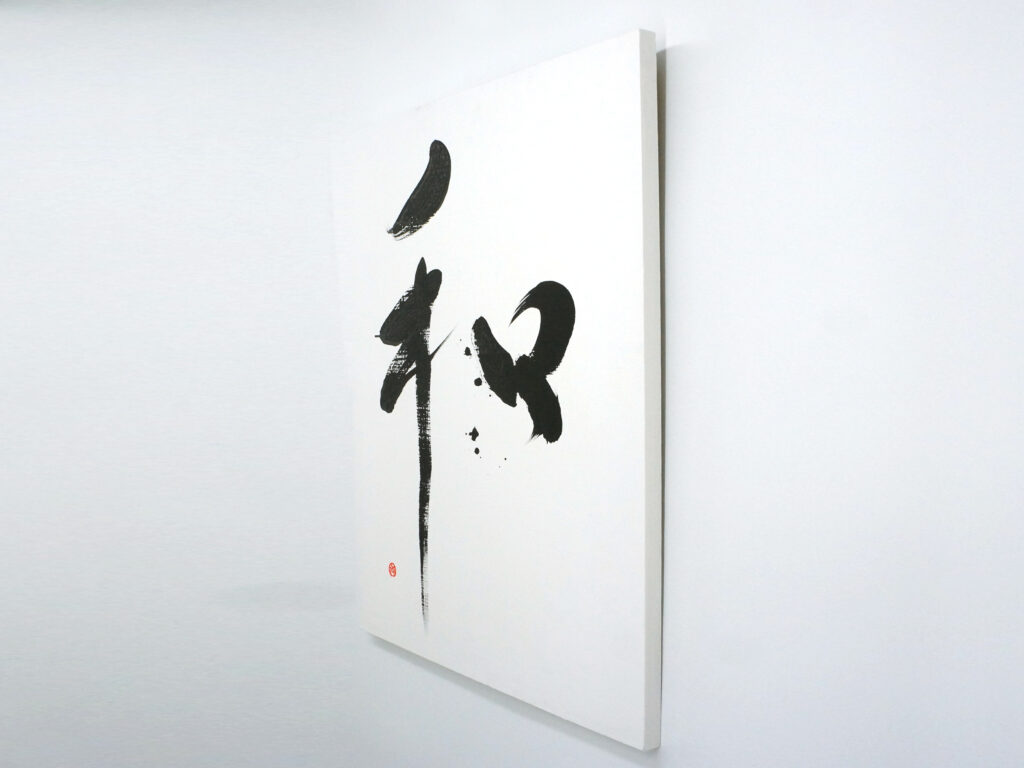
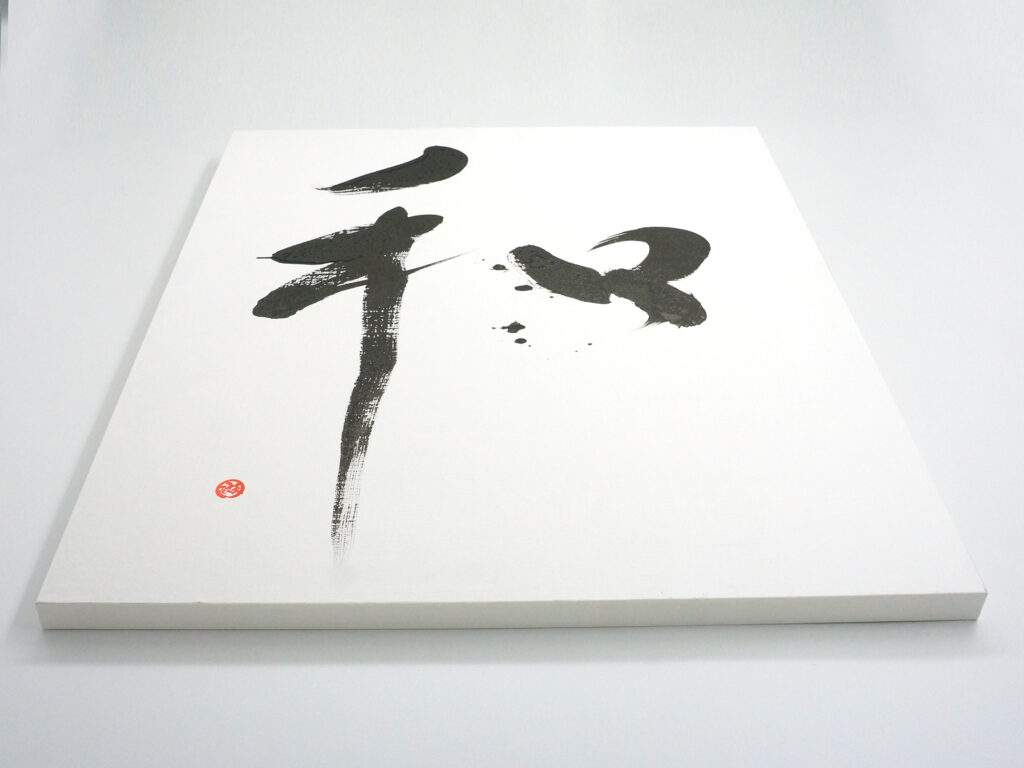
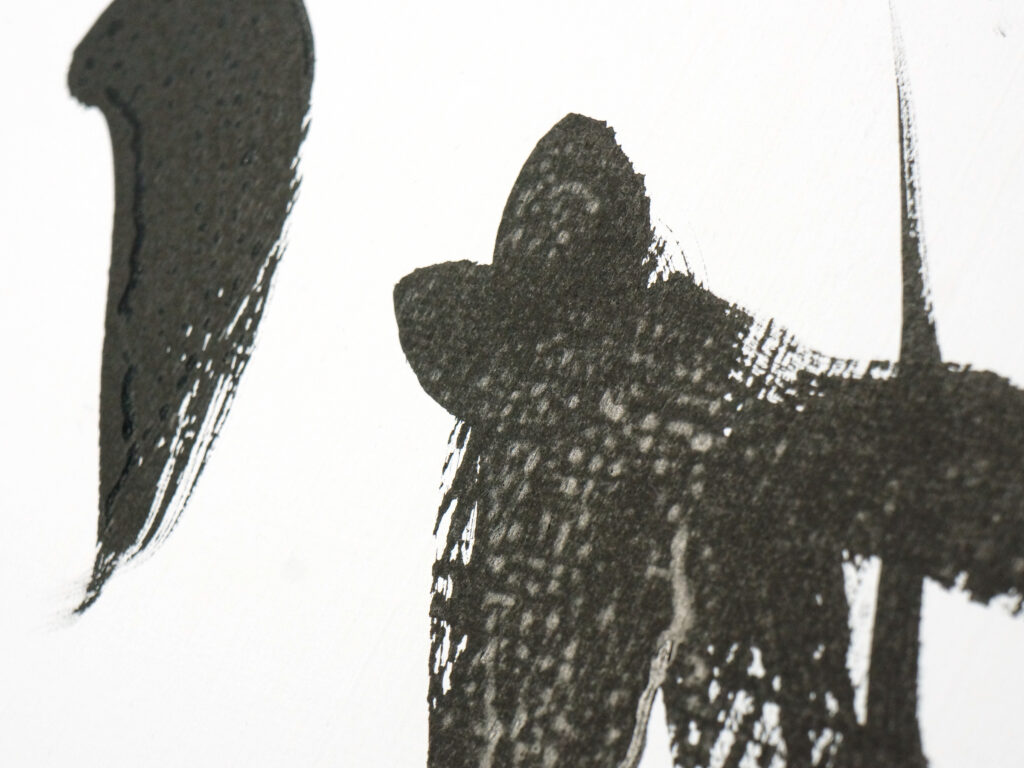
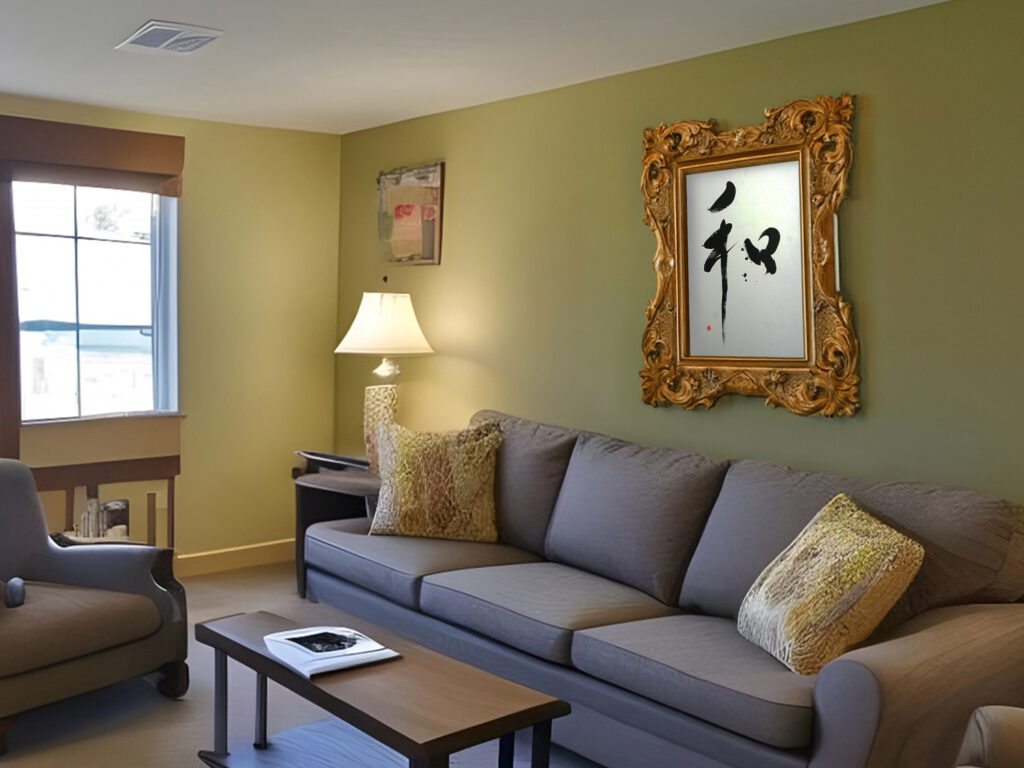
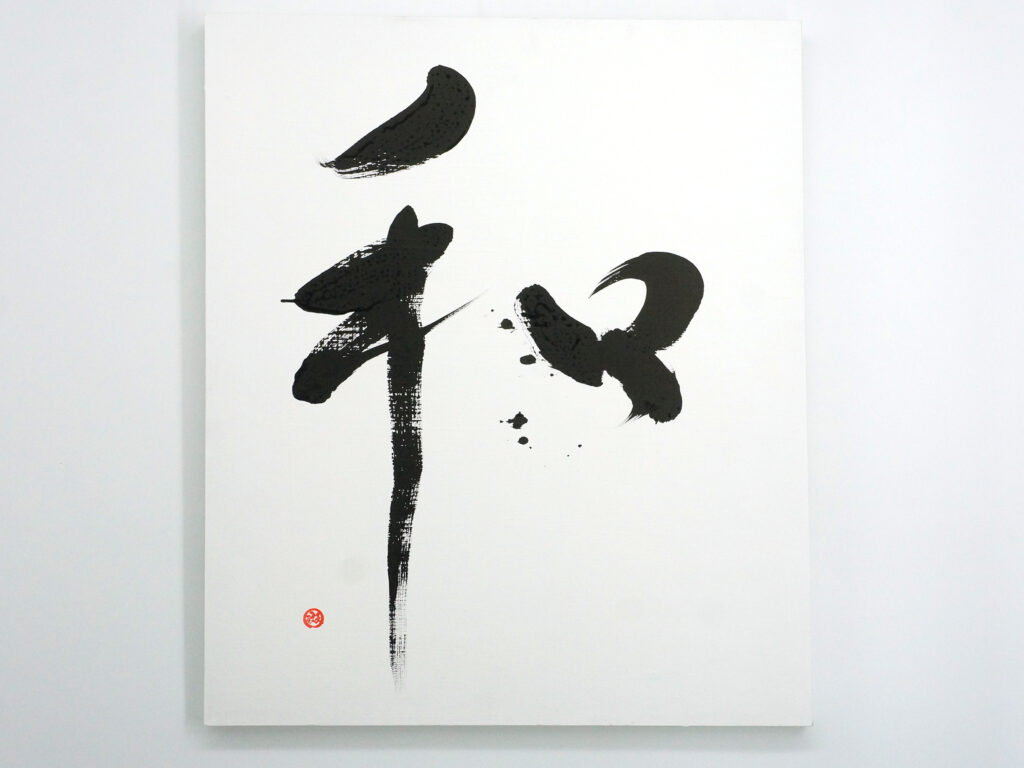
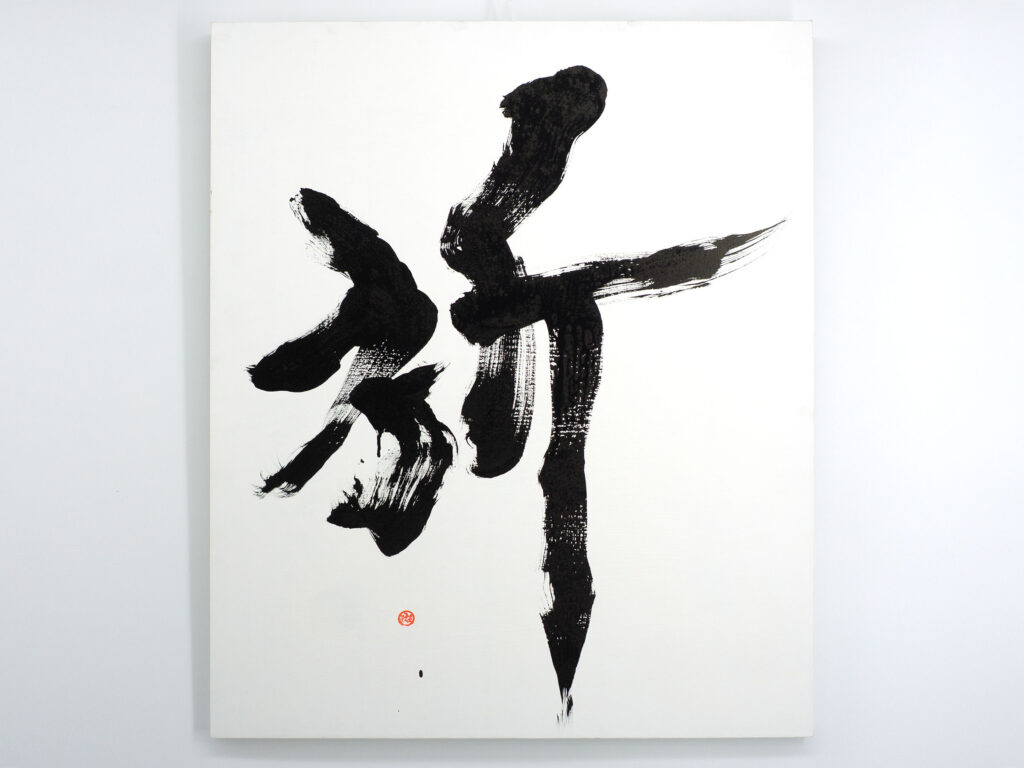
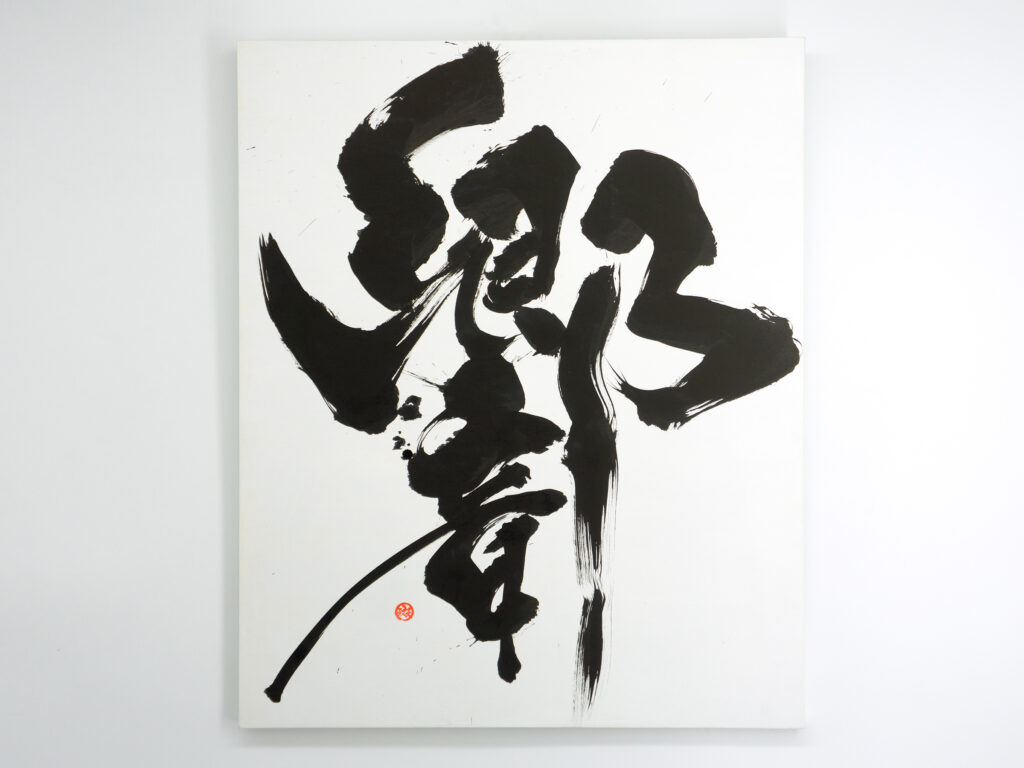
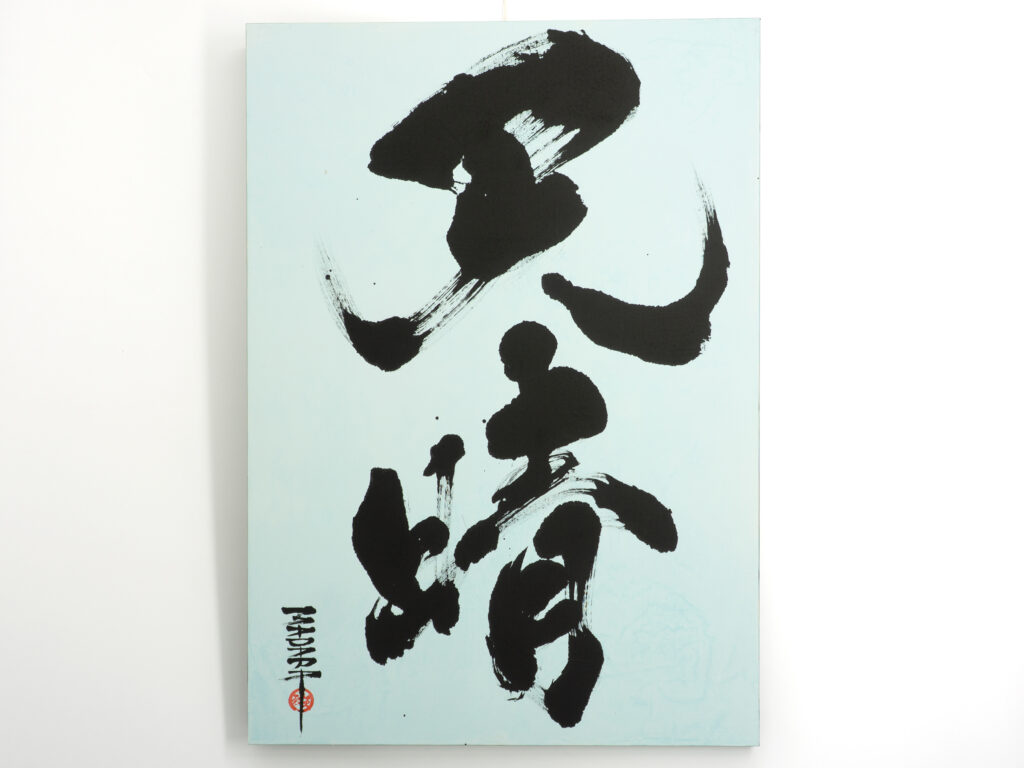
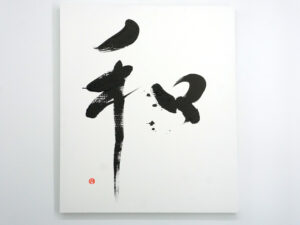
“Wa” is not understood here as a word that defines external order or ideal harmony. Rather, it is seen as a state that exists quietly within each person. Before emotions such as anger or anxiety, desire or hope arise, there is a deeper layer—a formless stillness. This work was created as an entry point to that inner realm.
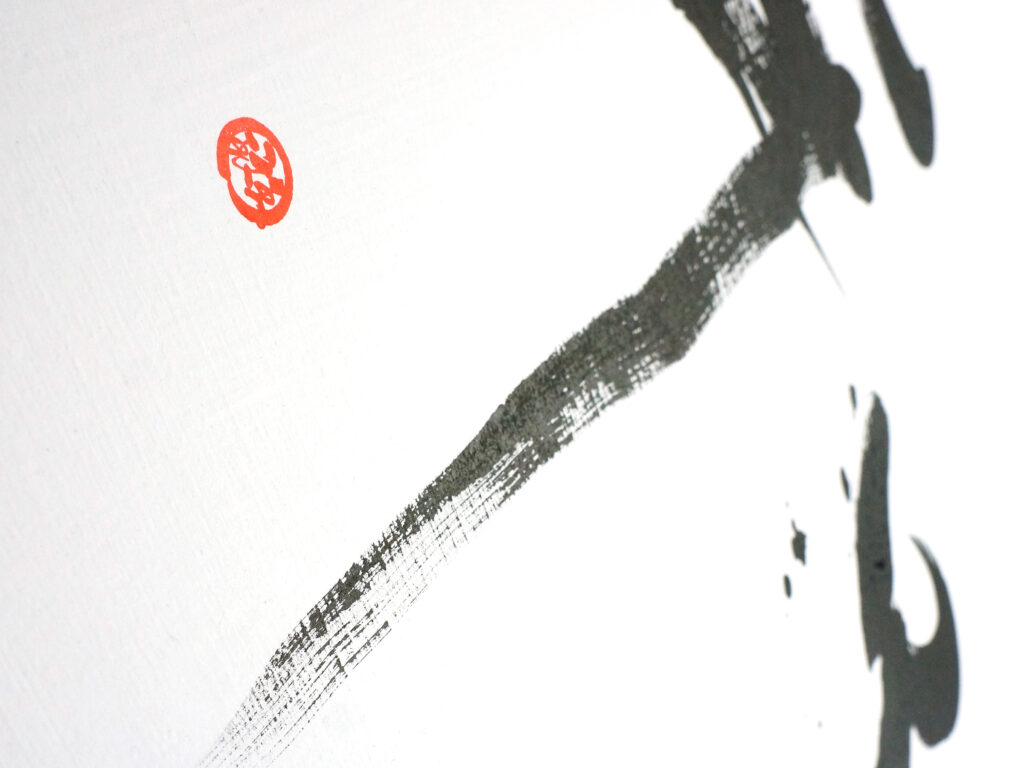
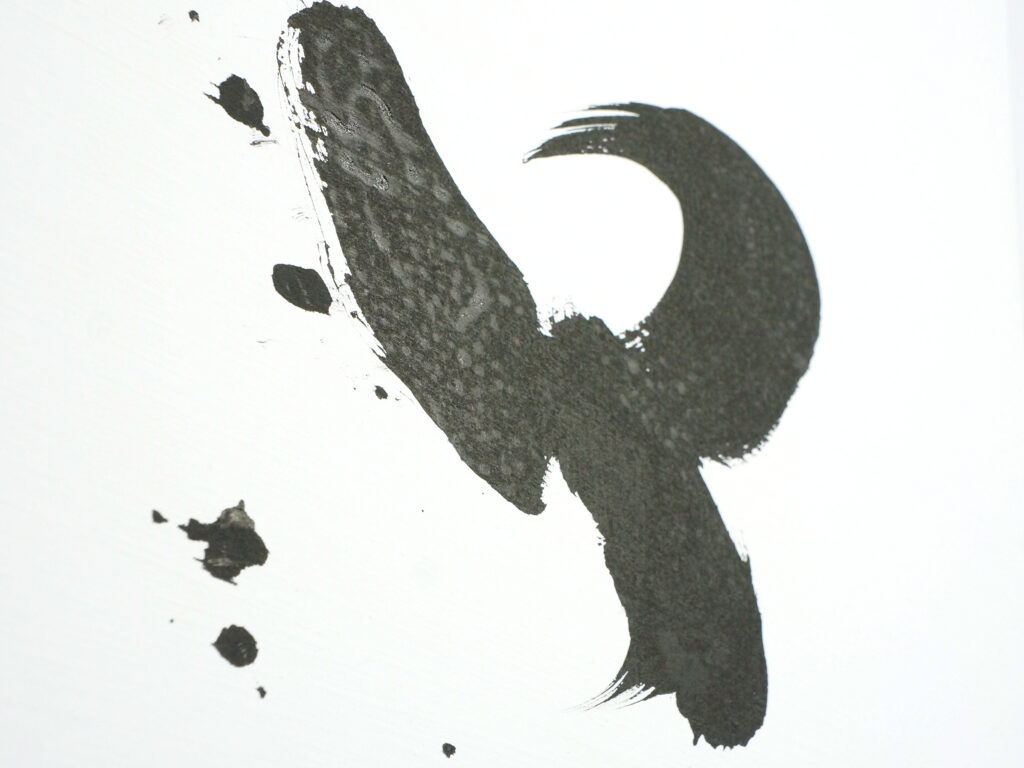
Before taking up the brush, I do not determine a composition. I steady my breath, release intention, and wait for the moment when body and mind align. The flow of the ink, the fluctuation of pressure, and the speed at which the washi absorbs each stroke are all direct reflections of my internal state at that instant. The lines that appear are not controlled expressions, but traces of existence itself.
The character “Wa” signifies harmony, coexistence, and acceptance. Yet I feel these are not qualities bestowed by others, but something closer to a right that everyone inherently possesses. This work does not assert a message or offer an answer. Instead, through space and silence, it opens a place where viewers may face their own inner world.
To be quiet is not a sign of weakness. It is also a form of strength—one that continues to stand while accepting uncertainty. “Wa” exists as a prayer that does not raise its voice, yet remains undeniably present.
Read more
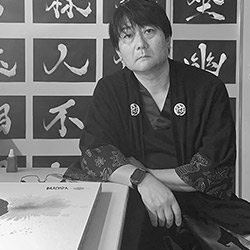
What is MADARA?Pen name: Madara (MADARA) Real Name: I refrain from disclosing my real name in order to focus on my work and concepts. Date of birth: May 6, 1972, Fukushima …
Behind the Scenes
On the Creation of “Wa”
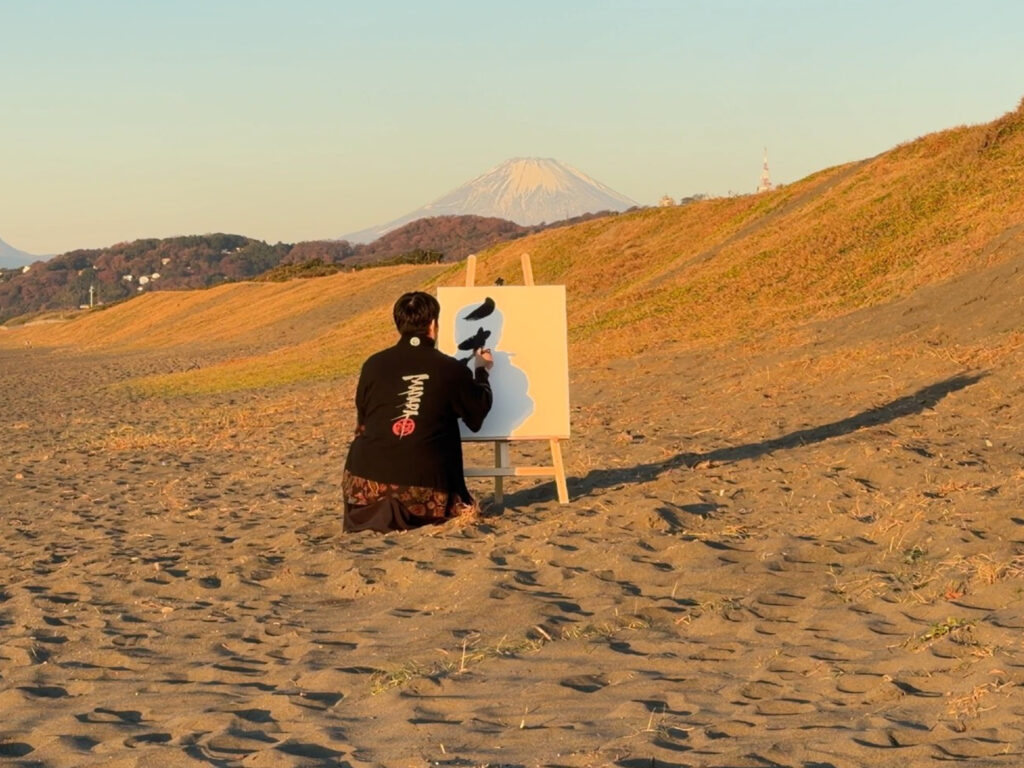
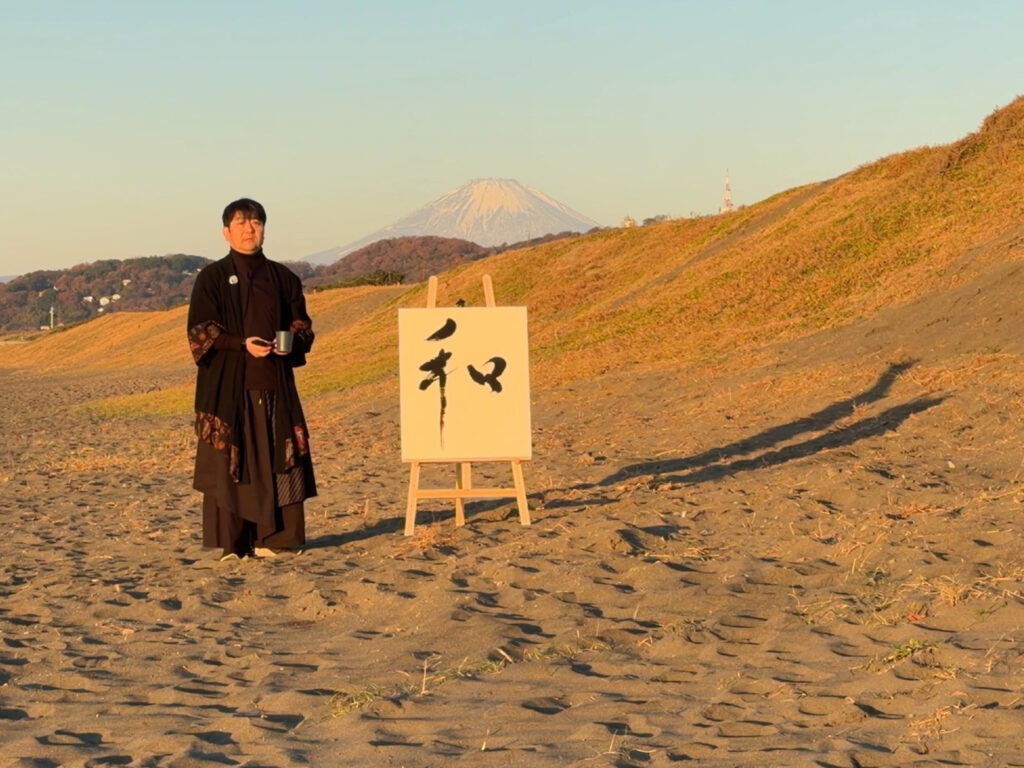
This work, Wa, was created on the coast of Hiratsuka in Kanagawa Prefecture as a closing gesture for the year 2025. It was not a carefully staged or extensively prepared production. Carrying a quiet question—how to bring this year to an end—I went to the sea with only the minimum tools necessary.
The winter shoreline was nearly empty, filled only with the sound of waves and wind. The cold sand beneath my feet, the distant silhouette of Mount Fuji, and the gradually shifting colors of the setting sun—all of it entered my body without conscious effort. Writing in this place felt less like an act of expression and more like an act of realignment with myself.
When I stood before the canvas, I had not decided how to write the character Wa. I took up the brush with the intention of releasing everything—the events of the year, relationships with others, emotions that had wavered, and lingering afterimages. At times, the wind disrupted the movement of the brush, preventing it from going where I intended. Rather than resisting this instability, I chose to accept it and follow its flow.
The lines that emerged ultimately contained more space and intervals than force. It felt less as though I was aiming for Wa, and more as though Wa remained after everything else had been let go. This work is a record of that process—of being honest with time, the body, and the natural environment in which it was created.
Kanji meaning
Wa
The kanji Wa signifies harmony, tranquility, and coexistence. It does not mean suppressing conflict or forcing everything into uniformity, but rather a state in which different elements acknowledge one another and exist together.
Since ancient times, Wa has been a foundational concept in Japanese culture, expressing the relationships between people, between humanity and nature, and between one’s inner self and the external world. It is not an order imposed from the outside, but a quiet balance cultivated within each individual.
In this work, Wa does not represent a completed ideal. Instead, it symbolizes a state of mind to which one can return—even while embracing uncertainty and imperfection—and a form of inner stillness that everyone inherently has the right to possess.
item
Content
The basis of the work
Wood Campus
Material
wood, Japanese paper(Washi)
Size
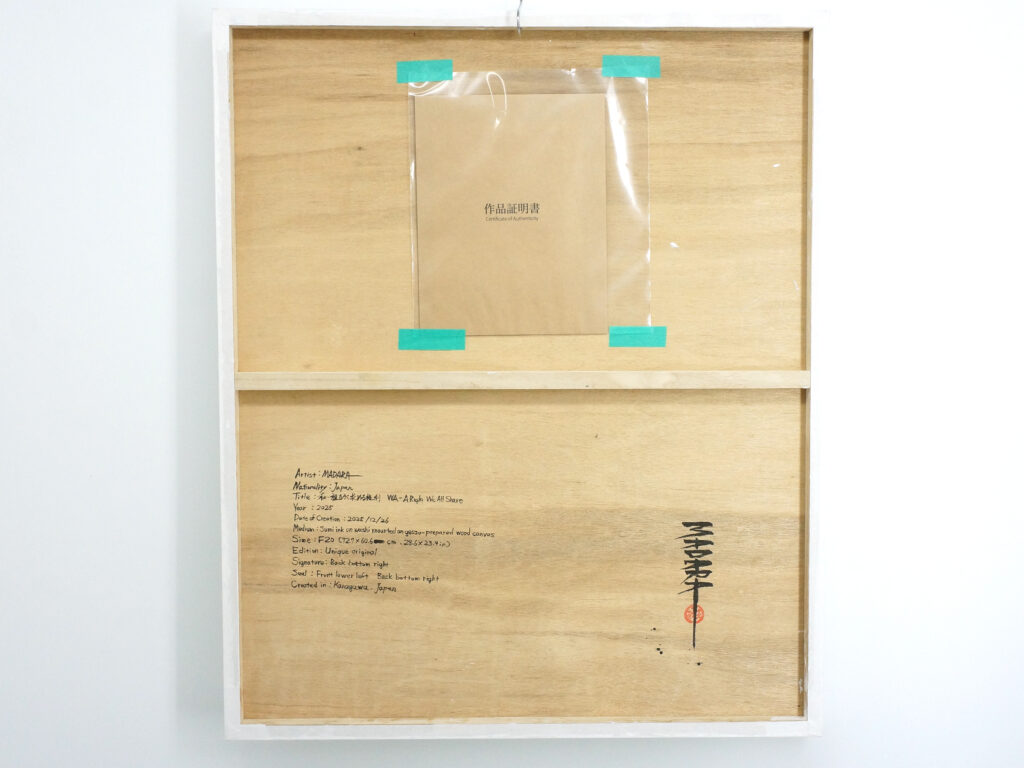
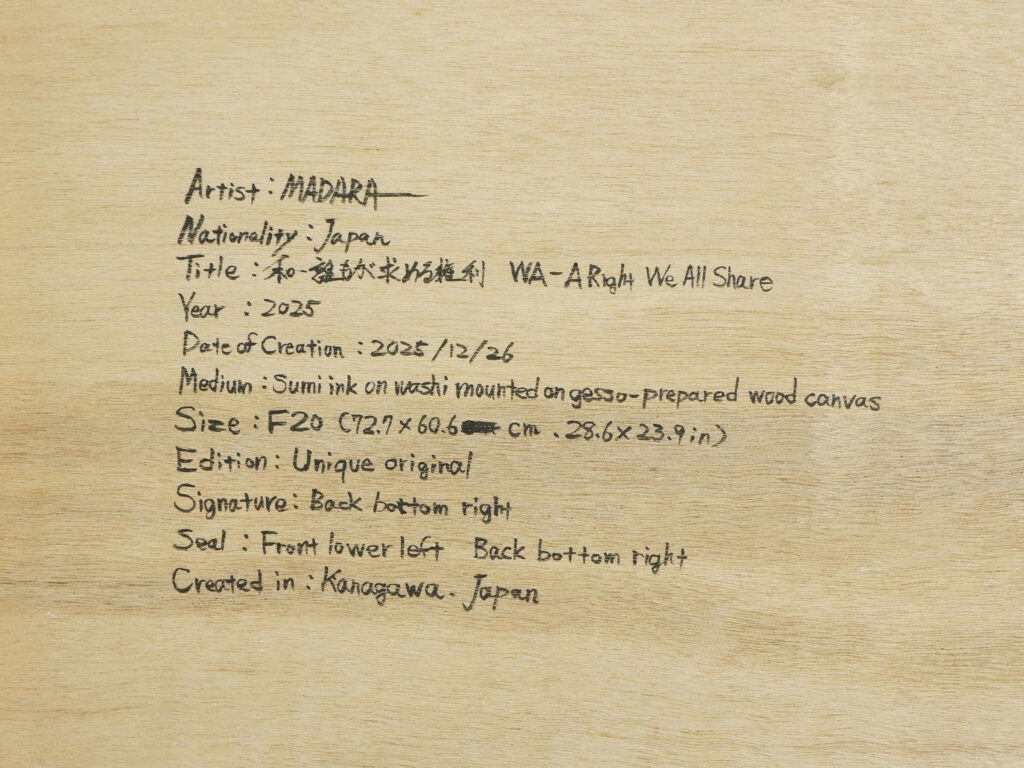
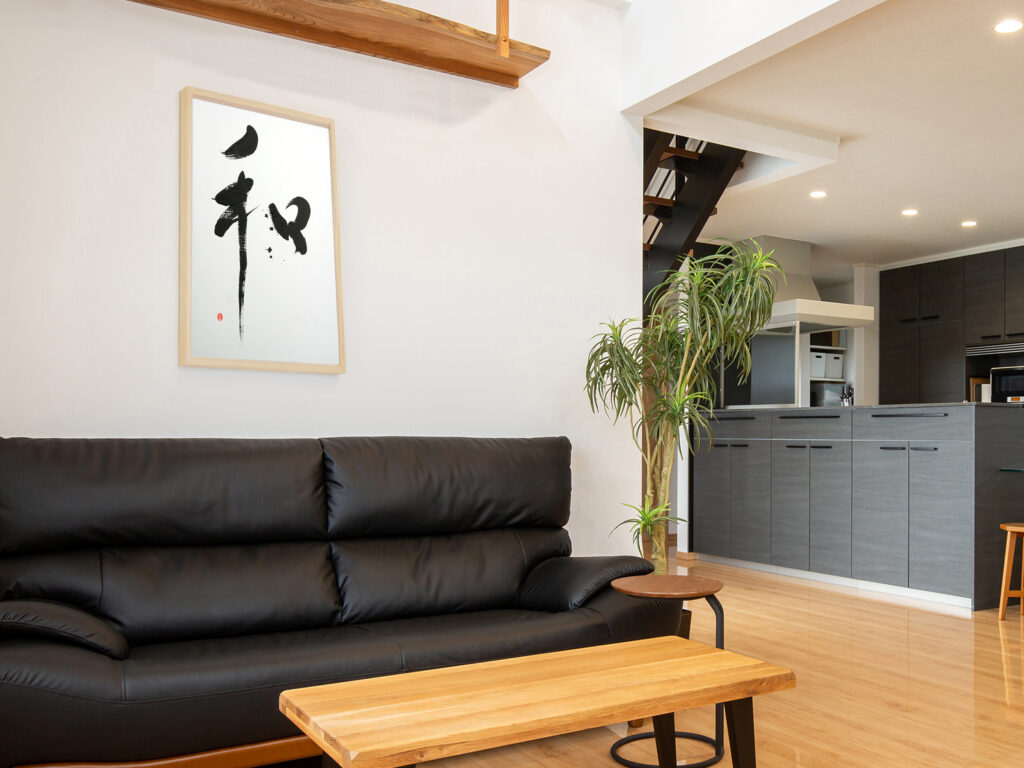
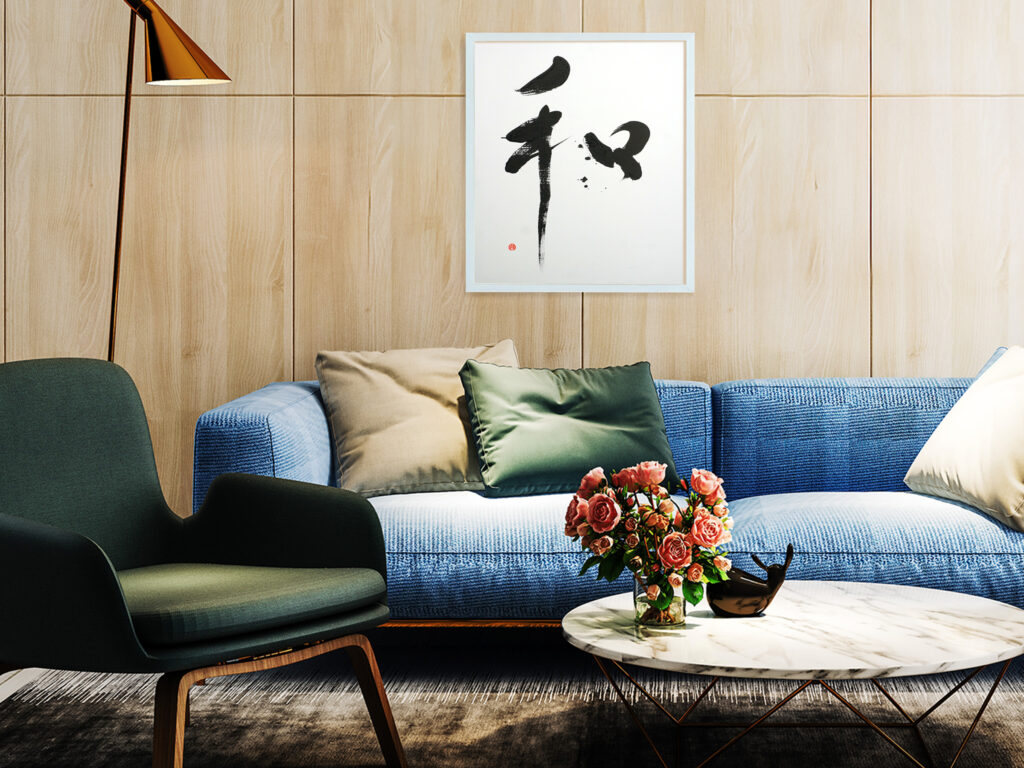
F20 28.6in(727mm) × 23.8in(606mm)×0.98in(25mm)
Materials used
Sumi-ink
Finishing the work
The wooden canvas is primed with gesso, calligraphy paper (washi paper) is pasted on top, and the painting is finished with ink.
Regarding domestic and international shipping
・International shipping available: Ships via FedEx if no designated shipping company is specified. ・Domestic shipping in Japan: Ships via Yamato Transport if no designated shipping company is specified.
Packaging at time of shipment
We can also accommodate requests for packaging such as simple packaging and heavy-duty packaging, so please contact us for details.
Shipping
Decisions will be made in consultation with the buyer, such as using transportation suitable for art works and taking out insurance.
Compensation for works
The artwork will be delivered in the same condition as when it was sold. If you would like to purchase art insurance, we are happy to discuss this.
Payment Method
The payment amount is the artwork price plus shipping. Payment can be made by credit card.
Artwork Storage and Handling
At our atelier, each artwork is carefully wrapped individually in Japanese washi paper and stored in a climate-controlled room where temperature and humidity are kept stable at all times. The artworks are preserved in an environment protected from light, moisture, and dust, ensuring they remain in optimal condition until delivery.
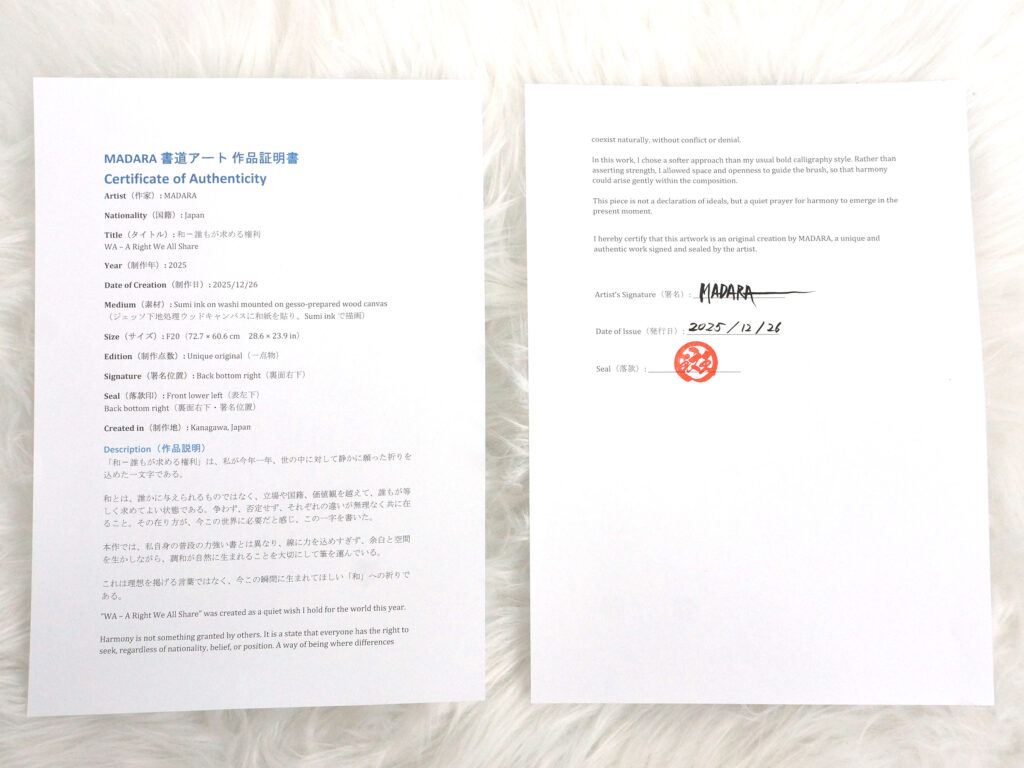
After purchase, each piece is prepared with specialized protective packaging and shipped with the highest priority placed on safety, both domestically and internationally. A Certificate of Authenticity is included with every artwork.